.png)
 Brooklyn McKinney
BY BROOKLYN MCKINNEY
Multimedia Journalist
The bestselling author of “The Chronicles of Narnia” has impacted readers with several books inspired by his Christian faith.
Among these works is “The Screwtape Letters,” a series of letters from a senior demon, Screwtape, advising his junior protégé how to tempt the person assigned to him towards eternal damnation.
Initially published in The Guardian in 1941, a religious newspaper based in London, weekly letters thoroughly examined the war between good and evil through the satirical voice of Screwtape.
The series was a great success in The Guardian and went on to become a classic among Christian novels because of its insights on human nature during WW2, one of the darkest periods of the 20th century.
Just a year later, a novel version was published as chapters revised into more general language intended to resonate with readers over time. In 1961, the ending was even extended with the essay “Screwtape Proposes a Toast.”
Although the human or “patient” referred to in Screwtape’s letters was a man living in the 1940s, I found a lot of the commentary surrounding his life surprisingly relevant to mine.
Through Screwtape, Lewis is giving fellow believers advice on what not to do if they don’t wish to give Satan and his demonic forces a foothold in their lives.
Rather than diving into all 31 letters and the epilogue-like essay, here are six spiritual insights I took from enemy lines.
1. Don’t stay distracted – act.
A common tactic used by Screwtape and his protégé nephew, Wormwood, is to distract their patient from prayer by redirecting his focus towards other thoughts or tasks to pull him away from God’s presence.
I would argue that this remains one of the greatest obstacles standing in the way of Christians acting on their faith or pursuing their dreams. With social media, we have the entire world at our fingertips yet don’t seem to get anything done. “I’ll do it later” is almost always followed by hours of doomscrolling, and then “I’ll do it tomorrow.”
2. Go to church for God, not people
Another easy way to lead someone away from God is ironically to get them to go to church, or even several churches where they can’t help but fixate on the flaws of the people in attendance.
While I would still argue that it is important to surround yourself with a supportive community of believers by picking the church that’s right for you, this becomes an issue when personal accountability is lost. Many hold such unattainable standards for imperfect people that they end up church-hopping, unable to stay rooted long enough to be fed spiritual lessons through the body of Christ.
3. Don’t be led by feelings
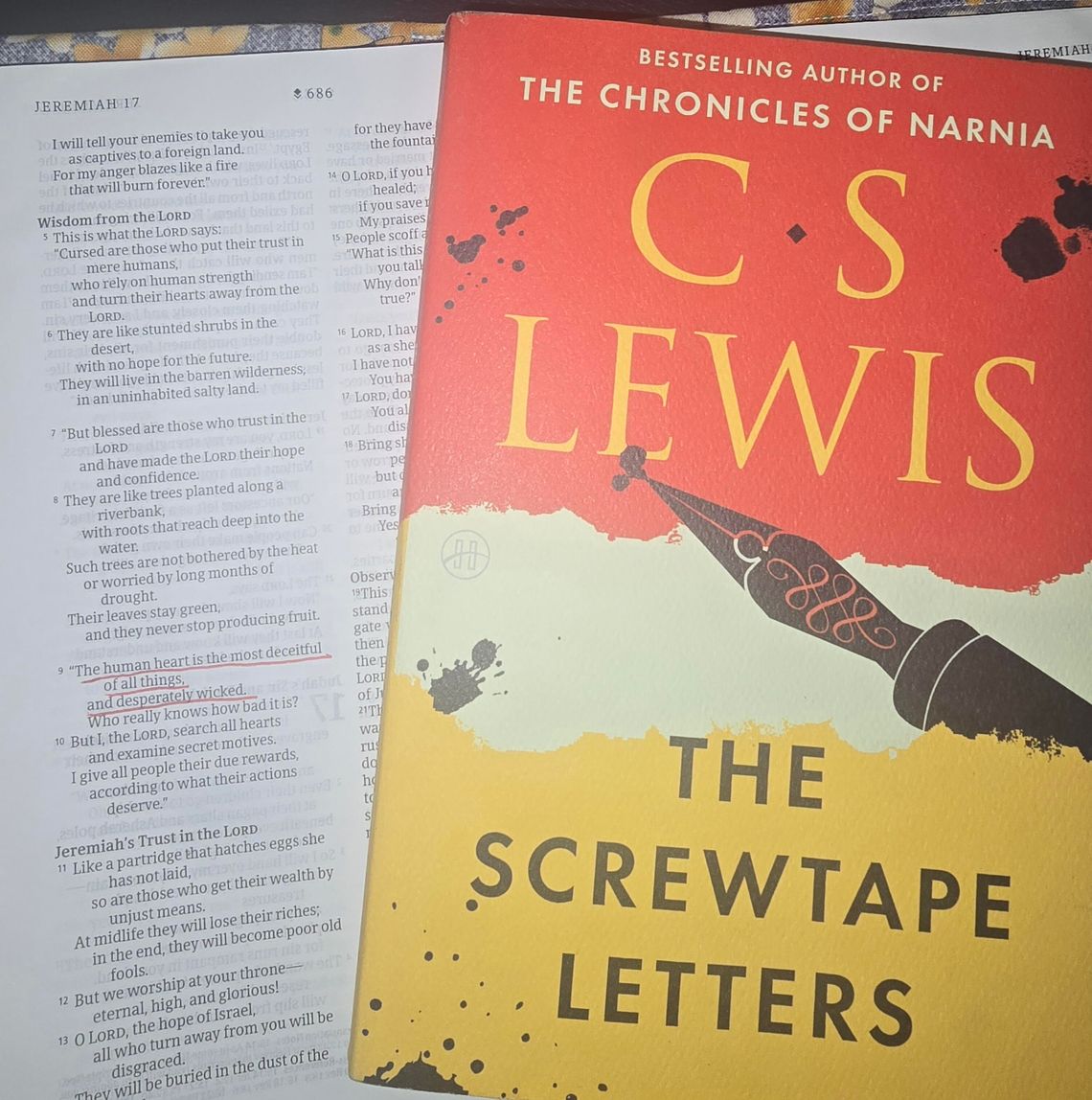
This is no secret because Jeremiah 17:9 tells us that “the human heart is the most deceitful of all things.” This truth applies not only to the life of the patient referenced in Screwtape’s letters but to many believers today – especially when we are no longer experiencing the ‘spiritual highs’ that make us feel close to God.
No matter how we feel in the moment, scripture still commands us to obey God and pursue a relationship with Him. This could easily apply to marriage as well. I used to listen to this song when I was younger which said “love is not a choice.” Well, Jesus made the choice to die on the cross for our sins, so it is.
In the same way that you can’t neglect your relationship with God because you don’t “feel” close to Him, you also can’t mistreat your spouse or cheat on them just because you don’t particularly “feel” like loving them that day. Faith, much like relationships, is sustained through commitment and not emotions.
4. Stay grounded in the present
To many people, living in the moment might seem reckless or irresponsible. However, one of the main takeaways I got from Screwtape’s letters was a reminder to avoid the trap of fixating on the future.
It’s easy to sit and daydream about advancing in your career or getting married and building a family without actively taking steps towards it. On the other hand, dwelling on the past and replaying mistakes only robs you of your peace and confidence. Both extremes drive us away from the present moment, where God’s grace and guidance actually exist.
5. Don’t fall for the “I’m as good as you” mentality – strive for excellence
Through his essay “Screwtape Proposes a Toast,” Lewis mocks the push for equality in culture and even the decline of quality education within the public school system.
Using a teenager who hid their interest in classic literature and music to fit in with their peers as an example, Lewis claims that this promotes an environment of mediocrity where humanity will not remain inspired to accomplish great things. In a world where college students often lack the confidence to send an email or submit a quiz without using ChatGPT, I’d have to say I agree.
“The Screwtape Letters” by C.S. Lewis has remained a timeless fixture in Christian literature because it brings awareness to what demonic influence might actually look like – a topic that still feels taboo in many circles.
The truth is that evil isn’t limited to dictators or serial killers. Ordinary people, even those with good intentions, can be led astray to join them through subtle compromises if they’re not careful.
Comment
Comments