.png)
 Brooklyn McKinney
BY BROOKLYN MCKINNEY
Multimedia Journalist
A lot of people don’t know what poetry is because they only grew up learning the right pattern of syllables to form a Haiku or how to dissect the hidden meanings behind old English poems of the 17th century; but the real beauty of poetry is that there are no rules.
What makes a poem good is the quality of the words written, where they can take the reader’s mind and the intent behind the patterns and punctuation, or lack thereof.
The quantity of syllables or rhymes doesn’t matter so much as whether it impacts the reader and makes them think or feel something.
Good poetry is both easy to understand for the audience it was intended for and also open to interpretation, because to be a poet is to be an artist – they paint a picture with their words and connect different concepts or ideas through heavy imagery and other rhetorical devices that any other type of author would use.
Through different rhythms and sounds, a certain atmosphere can also be created around the words of a poem.
Poetry tells a story in the same way as your favorite film or a painting would. It can’t die with the archaic language of Beowulf or Shakespeare because art is always adapting to the language and ideas of its time.
In the same way that a poem doesn’t have to be overpowered by flowery language, it also doesn’t have to match the cliché nature of many of the one liner posts seen on Instagram that could easily be found on a sign at Hobby Lobby.
In fact, many poetry enthusiasts or writers such as myself would argue that they lack the originality that makes a poem what it is: an artform.
While this is the idea of “modern poetry” that exists in many people’s heads, there are still great poets today with collections that are sitting on the shelves of bookstores or even on our social media algorithms.
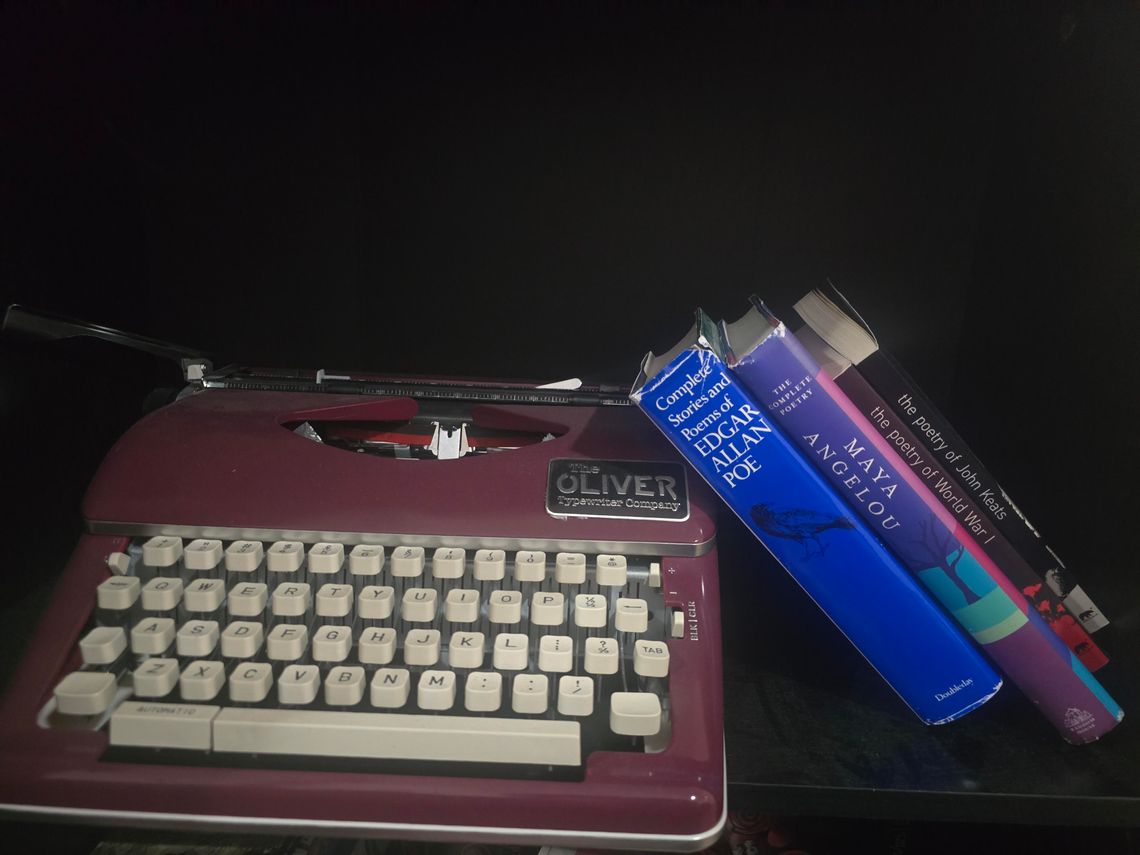
Maya Angelou, a well-known civil rights activist, has published several poems that are easily understood and accessible to the average reader.
What makes her poems so distinct is that she can express these detailed snapshots of her experiences as a black woman in segregated America, which express more passion than most people could without even taking up an entire page.
Many of her poems make up for what they lack in length with their lyrical rhythm and intention. She is, in my humble opinion, what many so-called “poets” on social media are aspiring to be.
However, there are many accounts who are currently inspiring people and going viral for the right reasons.
For example, Toni Willis performs her poems on her TikTok account, @toniwritespoetry, with over 32,000 followers. Her most viral video, with 1.7 million views, was her spoken word poem “The Waiting Room.”
While many accounts dedicated to poetry have tackled the woes of a “situationship” or romantic relationship with a lack of labels or clarity over time, Willis does so through a faith-centered perspective.
Although “The Waiting Room” is described as a literal place, it serves as a mental space where women “exchange being God’s everything to being a man’s maybe.”
While many spoken word poems have been gaining traction on social media recently, this is not a new concept.
When I was about 13 years old, I started listening to poetry on YouTube that was often performed live at slam competitions, which originated in the 1980s.
The word “slam” comes from how the audience had the power to hype up or kill the atmosphere around a poem, as well as from the theatrical performance style of the poets.
Poetic storytelling can take on many different forms, from print to spoken words and even the lyrics of our favorite songs. If you pay attention, many different genres of music have lyrics that are similar in structure to poems through rhyme and sound.
Songs are meant to convey emotion through music, so many of the words that people sing are written to do the same and could easily stand alone as poems.
There are still many opportunities to perform poetry today, whether it’s on stage with a guitar or at a slam competition in a bar or coffee shop.
While many people believe that they don’t understand the art of poetry, it’s always been a universal language.
Poetry isn’t dying; it’s a timeless form of storytelling that connects society by expressing human experiences through colorful words that inspire us to reflect.
If you’re a fellow wordsmith who wants to make an impact on the Tarleton State University campus, the Bosque River Review is currently accepting student submissions at [email protected].
For more information, visit their Instagram page, @thebosqueriverreview.
Comment
Comments