.png)
 Gavin Patrick
BY GAVIN PATRICK
Sports Editor
It’s been more than a week since reports started to arise that the NFL and NFL Referees Association had reached a gridlock on negotiations for a new Collective Bargaining Agreement (CBA), and that the league is well on its way toward its first referee lockout since 2012.
This means regular NFL officials would not show up to work while replacement referees assume their duties — likely for preseason and regular season games — until the two sides reach an agreement on a new CBA.
If there’s one thing all sports fans can agree on, it’s that we never want to hear about officiating. It’s just one of those things that brings an impotent nausea to our being.
It’s bad enough when a blown call overshadows the outcome of a game, and all people can focus on is a lapse in judgment from an arbiter instead of the brilliant athletic feats from the game’s real heroes. But imagine talking about officiating in the offseason — when there are no games. There has to be a bigger issue(s) at stake, and that’s where we are today.
So how did we get here? And which side is right to be dug in?
Where we stand today
The NFL and the referees’ union have been negotiating a new CBA since 2024, and with the current agreement set to expire on May 31, they expected much more progress to this point. To get a sense of just how far apart the two sides are, one league source told ESPN it would take an “act of God” for the parties to reach an agreement before a lockout.
That’s why the NFL is now laying the groundwork for replacement officials—and much earlier than they did the last time these negotiations went awry. In 2012, the league didn’t start training replacements until two months prior to the regular season. It was an abject disaster. This time, the NFL will begin hiring and onboarding new refs as early as May 1 if talks don’t improve, many of whom would come from the low-college ranks.
But ironically, hiring replacement officials will make a deal with the NFLRA even harder to come to, “just from simple economics,” according to a source close to the matter. That’s why the NFL is setting a May 1 deadline for a resolution before they go through with stand-ins, even though the CBA doesn’t technically expire until the end of the month.
What are the key issues?
Salary: (Yeah, what else is new?) NFLRA executive director Scott Green said NFL referees are “substantially under-compensated” compared to game officials in the MLB and NBA. The union is reportedly demanding a 10% raise over the course of the new labor deal, while the NFL has offered 6.45% over six years. According to NFL executive vice president Jeff Miller, a 10% raise would be almost double the rate that has been given to the players over the current CBA period.
The NFLRA is also lobbying to increase officials’ compensation for marketing fees from $775,000 to $2.5 million, a figure Miller says is never given to rank-and-file union members.
Additionally, the NFLRA wants the same health care benefits for certain officials as those at the league headquarters receive. However, NFL referees are technically part-time employees, which forces many legal workarounds into discussion.
Job structure/performance standards: The NFL reportedly wants access to underperforming officials during the “dead period” — where officials don’t work from after the Super Bowl until May 15 — to deploy them to spring leagues for extra reps and other avenues for training. Along that same logic, the league also wants to increase the probationary period for new officials — where they can be fired without cause — from three years to five.
The NFLRA strongly opposes these changes. However, that’s not to say they don’t care about improving their performance.
According to Green, the union is proposing a performance program that would pay officials to attend at least two preseason team training camps, where they would work with their crews, players and coaches. The program also requires officials to attend three clinics during the season to discuss rules, foul recognition and crew consistency. The NFL cut funding for these clinics last year, says Green.
Despite however many officials end up working in season and out of season, the NFL does not want to reach the point of having to pay referees year-round. The league wants to get the best out of their officials without having to exhaust too many resources, a philosophy the two sides inevitably have to find middle ground on.
The NFL is also calling for meritocracy over seniority in assigning playoff games. This means the highest-performing officials — based on their yearly grade — would be more likely to get assigned the playoff games, instead of the current system where experience is more heavily weighted. (To fans, we couldn’t ask for much more.) But the union fears this system could cycle out referees too often and threaten long-term stability in an already prestigious profession.
It’s getting personal…
Sure, it’s normal for hard negotiations like this one to hit an impasse. The NFL just didn’t expect it to last this long. And now, mounting frustrations are spilling into the public.
League sources say owners are “alarmed” that the NFLRA has resisted the performance and accountability measures: “You have to perform every day. Players do it, coaches do it, lawyers do it, owners do it, and we continue trying to test ourselves and improve,” a source told ESPN.
On the other hand, the union challenged the NFL’s notion of performance pay and exposed the league for paying referees less for the conference championships and Super Bowl this year than they were paid for regular-season games: “That certainly isn't rewarding performance, as the NFL claims is their goal,” Green told ESPN.
The NFLRA also accused the NFL of spreading “false and misleading information” about the state of talks “instead of wanting to meet at the negotiating table,” in a message sent to Pro Football Talk.
Both sides have accused each other of refusing to negotiate in good faith. On March 25, reports came out that two days of planned negotiations were called off after less than half a day.
In fact, the situation has gotten so sensitive that the NFL sent a memo to teams on March 27 prohibiting public comment on the CBA negotiations, which some could argue is the league trying to control the narrative. But one day earlier, Green wrote a guest column for Sports Illustrated presenting the union’s arguments while attempting to clear up what he called “several inaccurate and false claims” that have swirled about officials.
Yeesh.
If you’re thinking, “Why not keep these things in-house?” you’re right. What’s supposed to be a fairly confidential situation has gone completely off the rails, and each side is attempting to save face, but also fight for attention, and — oh yeah — they’re not making any progress on what really matters.
Frankly, the fact that we’ve gotten to this point is ridiculous, which leads us to the million-dollar question…
Which side is right?
I’m siding with the NFL on this (as you may have assumed from the headline). I realize I can only speak as a fan, so I’m going to do so responsibly.
To me, the referees are overestimating their value to the game. Are they underpaid? Probably. But to keep asking for a 10% raise — double the rate that players have realized over the last six years, while the NFL is offering a respective bump of 6.45% — is too much. To be clear, the union has been demanding a 10% raise for two years. It’s OK to request that mark up front, but to sit on it as long as they have and expect the NFL to cave is a bit delirious, in my opinion.
Also, about the health care benefits, referees certainly deserve some level of protection — as they expose themselves to big, violent football players — but to demand benefits on the same level as Roger Goodell (Commissioner), Troy Vincent (EVP of Football Operations) and other members of executive leadership, even if they serve in a full-time position, is — again — delirious. Referees are important, but not that important.
Along those same lines, I don’t think NFL referees should be classified as full-time employees as their job requirements currently constitute. Green tried to sell them as such in his SI column, but he didn’t make the critical assertion that their jobs are on par with baseball and basketball officials — the levels at which they want to be compensated.
Here’s how I see it: even if the union argues that NFL officials do just as much work as their equals in baseball and basketball, and the NFL has plenty of money to reward them, ultimately the value is in the games, not the work. MLB officials work more than 100 games a year; NBA officials work more than 70 games a year. No NFL official works more than 18 games a year. Even if NFL officials spend an ungodly amount of time studying and meeting with their crews, and it somehow makes up for the limited game time, consider, too, the amount of travel and logistical gymnastics officials have to go through in baseball and basketball. It’s not even close. As much as the NFLRA doesn’t want to hear it, NFL refs have it easy.
Look, I know that the job of a referee is incredibly difficult; I can’t even catch every mistake when I first read my stories, let alone apply an NFL rulebook in real time. But I think—actually, I know—that a lot of NFL fans, coaches and players will agree when I say this:
Officiating has not been up to par in recent years.
Roger Goodell finally admitted it, too, saying in a press conference on March 31 that “[the league’s] No. 1 objective is to improve officiating.” Yes, he also said before the Super Bowl that he’s “so amazed” at how good NFL officials are. Some see this as insincerity and trying to manufacture leverage; I see it as, yes, they are so good at what they do, but society is pushing them to be even better.
With the continued rise of gambling, social media and advancements in instant replay technology, there is a bigger spotlight on game officials than ever before. They’ve always made mistakes, but when they do now, it’s undeniable. The NFL has also put a great emphasis on player safety and cracking down on “ticky tacky” procedures in recent years, like illegal formation, pass interference and illegal contact. Many players and pundits alike see the new thresholds officials have set for these penalties as hard or even impossible to adjust to. It’s seemingly turned the game into two-hand touch in some cases.
So now, more than ever, the NFL is seeing too many outcomes of games be overshadowed, or even defined, by “bad officiating.” And the worst part is people can’t come to their senses about it. You see it on social media, with people claiming, “the NFL is rigged,” or “officials favor the Chiefs,” and other ridiculous conspiracies. Whether any of that is fair or not, it’s bad for the game.
The one thing everyone can agree on at this point is that NFL officials need to be better. That’s why I love the idea of enforcing a results-based system for playoff assignments. (The NBA already does it.) To me, this is the NFL showing they care about their fans, while driving officials to be more accountable. Increasing the probationary period from three years to five helps accountability as well. It’s tough love. It’s what the league needs.
Again, officiating a football game is more difficult than most people can imagine. But whether it’s fair or not, NFL officials do not have favorable optics right now, and the NFL seems to be on the side with the fans. I think I know how this is going to end…
Now what?
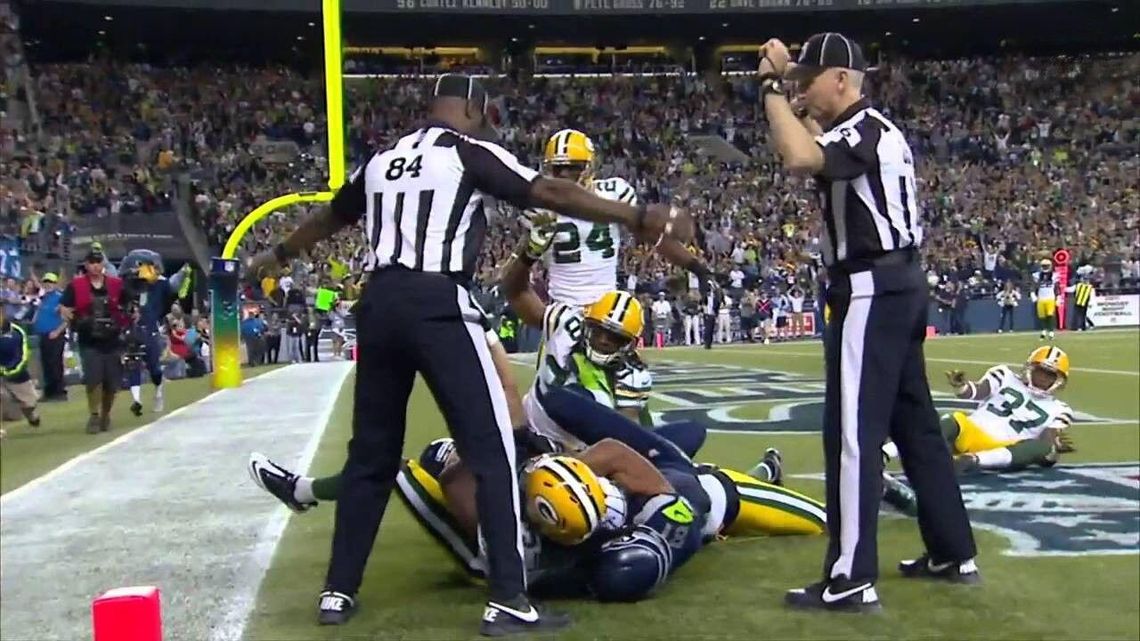
Well, with both sides content to play hardball and no indications on which will blink first, it probably means the NFL will have to operate with replacement referees for the first time in 14 years.
If you don’t remember 2012, or any time there has been a lockout of any kind in a sports league, just know: this is bad for football. Officials are part of the product just like the players, and when one of those parties is degraded, the product suffers.
But the NFL is preparing to support potential replacement refs, while also exercising any leverage cards they haven’t already played with the referees union.
At the annual league meeting in Phoenix March 31, owners authorized staffers in the league’s command center in New York City to correct mistakes — calls and no-calls — made by replacement officials during a game — much like Replay Assist works to instantly correct “clear and obvious” errors related to ball spots, roughing the passer, intentional grounding, etc. That’s the NFL saying, we can go on without our regular officials — and here’s how.
The NFL should have a great amount of leverage here. I think their proposals for the new CBA are good for the game of football, and they will ultimately win this battle. With a lot of the NFLRA’s demands, they just need to settle on more reasonable figures and get the ball rolling. It’s been too long already.
Let’s just hope we don’t have another “Fail Mary” in the meantime.
Comment
Comments