.png)
BY MADALYNN DAVIS
Contributing Writer
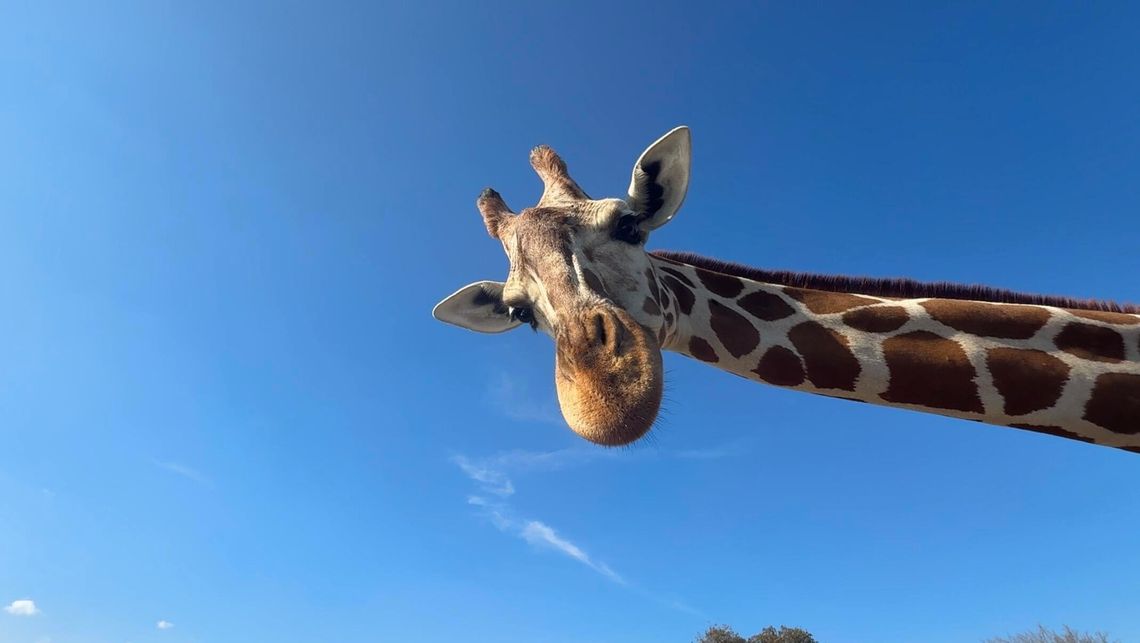
Imagine a 16-foot animal coming down from the sky and eating from your palm. This happens every day at Fossil Rim Wildlife Center, where visitors can roll down their car windows and feed Africa's tallest animal by hand.
Located in Glen Rose, Fossil Rim Wildlife Center covers nearly 1,800 acres of land in the Texas Hill Country. The center offers a drive-through wildlife adventure, accompanied by a variety of activities that combine conservation efforts with unforgettable experiences.
In 1973, Tom Mantzel, a successful oilman with a passion for exotic animals, purchased an exotic game ranch named Waterfall Ranch in Glen Rose, Texas, and renamed it to Fossil Rim Wildlife Ranch.
Mantzel used the ranch as a weekend retreat, but it soon became an obsession. His concerns about conservation led to a captive breeding program. In 1982, he introduced Grevy’s zebras in an attempt to establish a local population to increase the numbers of this endangered species.
This led to Fossil Rim becoming the first ranch to participate in the species survival plan (SSP). Developed in 1981, the SSP is a conservation program whose goal is to manage and protect endangered species.
Mantzel's success with the zebras inspired him to work with other endangered exotic animals. In 1984, after the collapse of the oil industry in Texas, he chose to open his ranch to the public. Fossil Rim Ranch experienced financial issues when Jim Jackson and Krystyna Jurzykowski decided to purchase it in 1987 and create what is known today as Fossil Rim Wildlife Center.
Unlike a typical zoo that uses closed exhibits, Fossil Rim has a variety of animals that roam freely in large open habitats designed specifically to mirror their natural environment.
According to Ashley Bevans, the director of marketing and development, the layout of the wildlife center is intentional and ties into the organization's mission of creating a better future for wildlife through their passion, place and partnerships.
The layout also allows visitors to drive through the wildlife center on winding roads to see exotic animals such as zebras, giraffes, cheetahs and more. Additionally, each vehicle is given a 16-ounce bag of food to feed the animals waiting alongside the vehicles.
While most wildlife centers keep their giraffes contained, Fossil Rim allows them to roam freely. These are the only animals in the center that are allowed to eat directly from a visitor's hands.
These opportunities that allow guests to get up close and personal with wildlife tend to incorporate the public with conservation education.
“Fossil Rim Wildlife Center is a 501(c)(3) nonprofit and stands apart through its unique combination of immersive safari experiences, active endangered species conservation and scientific breeding programs,” Bevans said.
Their funding structure allows the center to support endangered species recovery efforts both locally and globally. Fossil Rim’s website states every transaction at the park goes right back to conservation and animal programs.
They contributed 18 scimitar-horned oryx to the reintroduction of the species in its native country, Chad, located in central Africa. The reintroduction of the scimitar-horned oryx in Chad is important because they help restore broken ecosystems, control vegetation populations and re-establish biodiversity in the area.
Additionally, they are one of the top three cheetah breeding centers in North America. As of 2021, there have been 223 cubs born at Fossil Rim.
The cheetah breeding success is important due to the declining populations in North and West Africa. According to the International Union for Conservation of Nature (IUCN) Red List of Threatened Species, there are only 6,517 mature cheetahs in the wild.
Their various conservation efforts have positioned the center as one of several private conservation facilities that contribute to the recovery of wildlife populations.
Although their primary focus is on educating visitors on the importance of conservation, the center also includes scenic overlooks, hiking trails, adventure discoveries and a cafe. These additional adventures provide different learning opportunities for all ages.
“2026 is shaping up to be a landmark year for Fossil Rim,” Bevans said. “This October, we're launching Safari Camp, which is an exclusive glamping experience that lets guests spend the night in safari-style accommodations right in the heart of our main pasture.”
The experience is designed to give guests a once-in-a-lifetime way to experience wildlife up close.
“We're also wrapping up construction on our new state-of-the-art animal hospital, which will serve double duty as a veterinary education and research facility,” Bevans said. “This means school groups and vet students will get first-hand experience with wildlife care, helping us train the next generation of conservation professionals."
Fossil Rim Wildlife Center functions with the idea that getting up close and personal with these animals creates a driving need for change. Although the drive-through experience gives visitors a rare chance to look at exotic wildlife, the organization's primary achievement is its contribution to the SSP.
As the center looks toward the future, it will continue to use up close encounters to bring attention to challenges facing some of the world's most endangered animals.
Comment
Comments