
 Gavin Patrick
BY GAVIN PATRICK
Co-Managing Editor/Sports Editor
James Dearth was just learning how to long snap when Chuck Noll came over to help.
He was in Orlando, Florida, for the 1999 Gridiron Classic, an all-star game for college football players, three months ahead of the NFL Draft in April. Dearth played tight end at Tarleton State University and never once thought about being a long snapper until his agent told him, “Hey, you're gonna long snap at this all-star game.”
The balls were going all over the place. He didn’t know what he was doing wrong. He tried again. Same thing. Again. Same thing. Now he was getting skeptical looks from the players looking on.
Noll, a four-time Super Bowl champion coach with the Pittsburgh Steelers, was the head coach of Dearth’s team and had to find a long snapper for the game on Saturday.
“Man, have you done much of this?” Noll asked Dearth. “Well, I haven’t done it a lot,” Dearth responded, shaking in his cleats. Noll said, “Well, let me show you something.”
Noll told Dearth that he was gripping the ball too tightly and had him move his thumb to help his control temporarily. It felt a little better. He started snapping the ball straight back. Now it felt much better.
“Now just put your thumb back,” Noll said. “Don't grip it too tight.”
Dearth followed the order and started zipping them.
“OK, you're my long snapper,” Noll said.
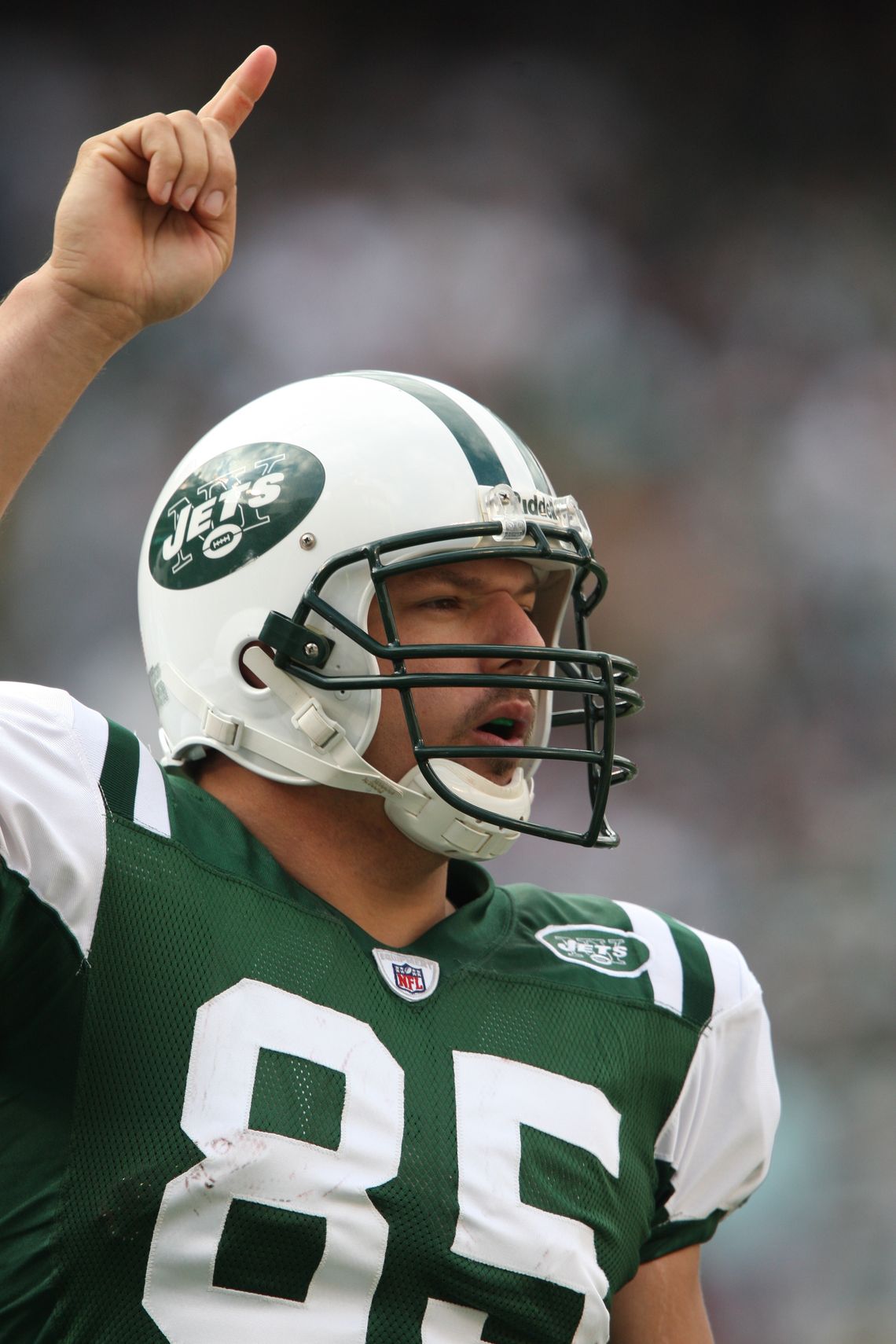
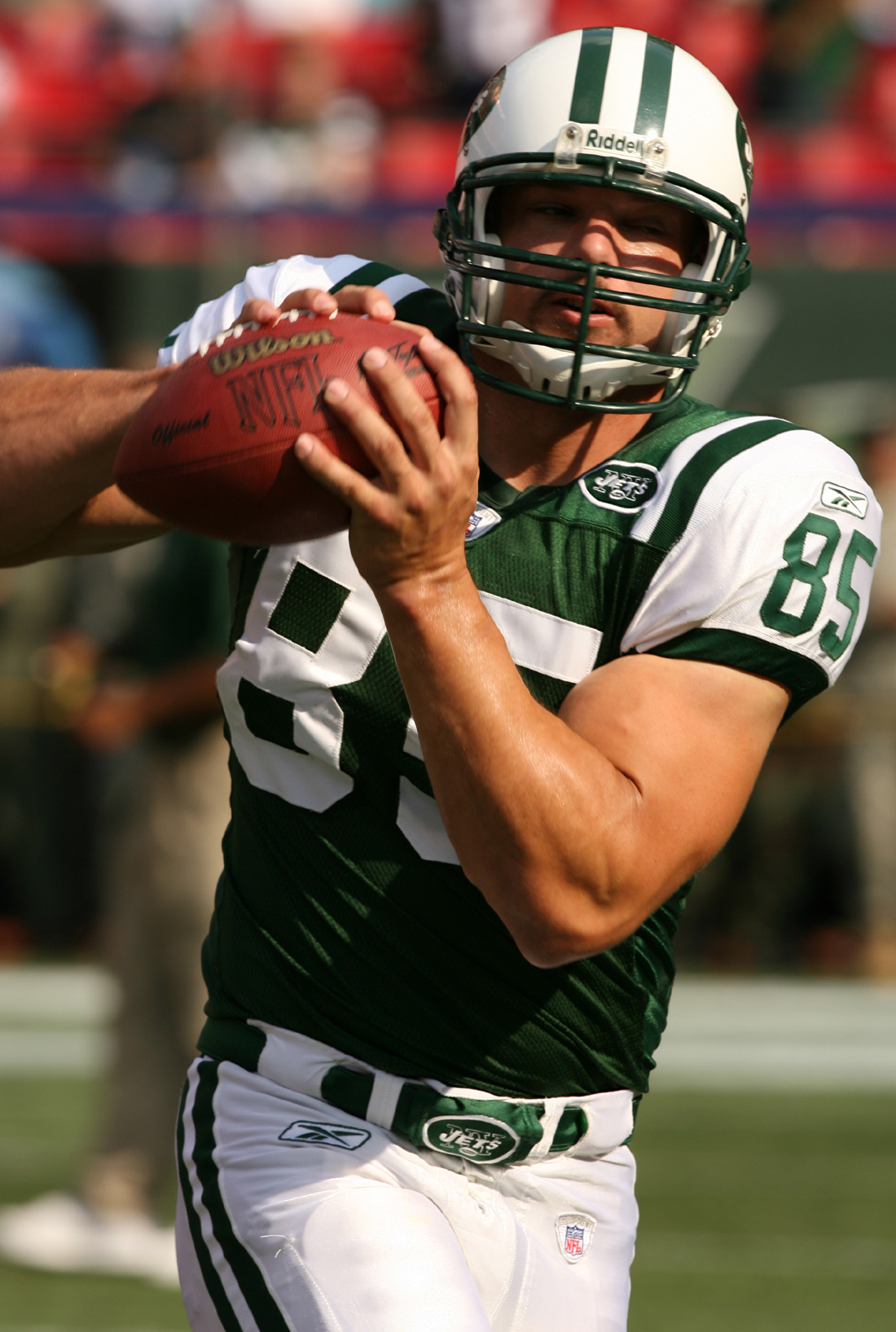
Dearth knows what it’s like to rub shoulders with a legend. He played with Pro Football Hall of Famers Kevin Mawae, Curtis Martin, Brett Favre, Alan Faneca, Darrelle Revis and Ty Law while on the New York Jets in the 2000s. But he was a long shot away from becoming a legend in his own right.
Dearth was 5 years old when he decided he was going to play in the NFL. He told his dad one day while they were watching an NFL game on TV. His dad kind of chuckled and said, “Oh, good.” From then on, it was business.
Dearth started his collegiate career at the University of Tulsa in 1995 and transferred to Tarleton the following year.
Todd Whitten coached Dearth his first year at Tarleton in 1996, his first of three stints at the university. It was Whitten’s decision to move Dearth to tight end, after he had spent all of his life playing quarterback and middle linebacker.
“He started out as a quarterback, and it wasn’t too long before we decided that moving him to tight end was going to be the best thing,” Whitten said. “I remember his father was not real pleased with that.”
Dearth wasn’t real pleased, himself, at first.
“I never wanted to play tight end, but when I was here at Tarleton, I asked Coach Whitten, I said, ‘What are my best chances of getting in the NFL?’ He looked at me and said, ‘You have to move to tight end,’ and I didn't bat an eye,” Dearth said.
Dearth went on to become an All-American at Tarleton—in football and shot put.
He arrived as a sophomore just two years after the university made the move from NAIA to NCAA Division II in 1994. He was under the radar in every sense.
“It was more of a rodeo school than anything, so sports weren't very big,” Dearth said. “I remember coming to the games and [thinking]: There's not a whole lot of people here watching the football games.”
Eventually, Dearth was noticed. He was drafted in the sixth round by the Cleveland Browns in 1999, becoming the first player from Tarleton to be drafted into the NFL since the AFL-NFL merger in 1970.
It was a dream come true for Dearth, but not for long.
Dearth couldn’t stay on his feet his first two years in the league. Injuries were nothing new for him—he had 11 injuries in high school—but this time it was especially brutal.
A ripped quad kept Dearth from success in Cleveland after making the initial 53-man roster. He got called back for the final two games of the ‘99 season, and that was that.
He got a fresh start on the Tennessee Titans’ practice squad the following year. This time, he didn’t play in a single game, and a hamstring injury kept him off the field again. Two years. Two teams. Two games played.
But Dearth kept grinding, and he wasn’t in it alone.
His wife, Laurie, has been with Dearth since high school. They married almost right away in the summer of ‘96. James was the quarterback at Scurry-Rosser High School, and Laurie was a cheerleader.
“It was kind of a good ol’ Texas football story,” Laurie said.
Laurie remembers always having to be on her toes while following her husband early on in his pro career. Over their first six years of marriage, James and Laurie moved 12 different times back and forth between NFL cities and home.
“It was all an adventure for us,” Laurie said. “I remember thinking that he had to be, like, the toughest guy I've ever met, just to keep persevering through all the injuries and never giving up on his dream.” She added, “We kept our suitcases packed, basically, for whatever team called.”
Their lives were shrouded with uncertainty—and even desperation. Dearth spent a short time in NFL Europe in between his stints with the Browns and Titans, while his wife went back to Texas.
By this time, they had two kids to watch over, and their oldest was starting kindergarten soon. It was time to settle down, somehow.
Then the Jets came calling.
“I'm a small city guy, so being in New York was kind of a shocker for me,” Dearth said.
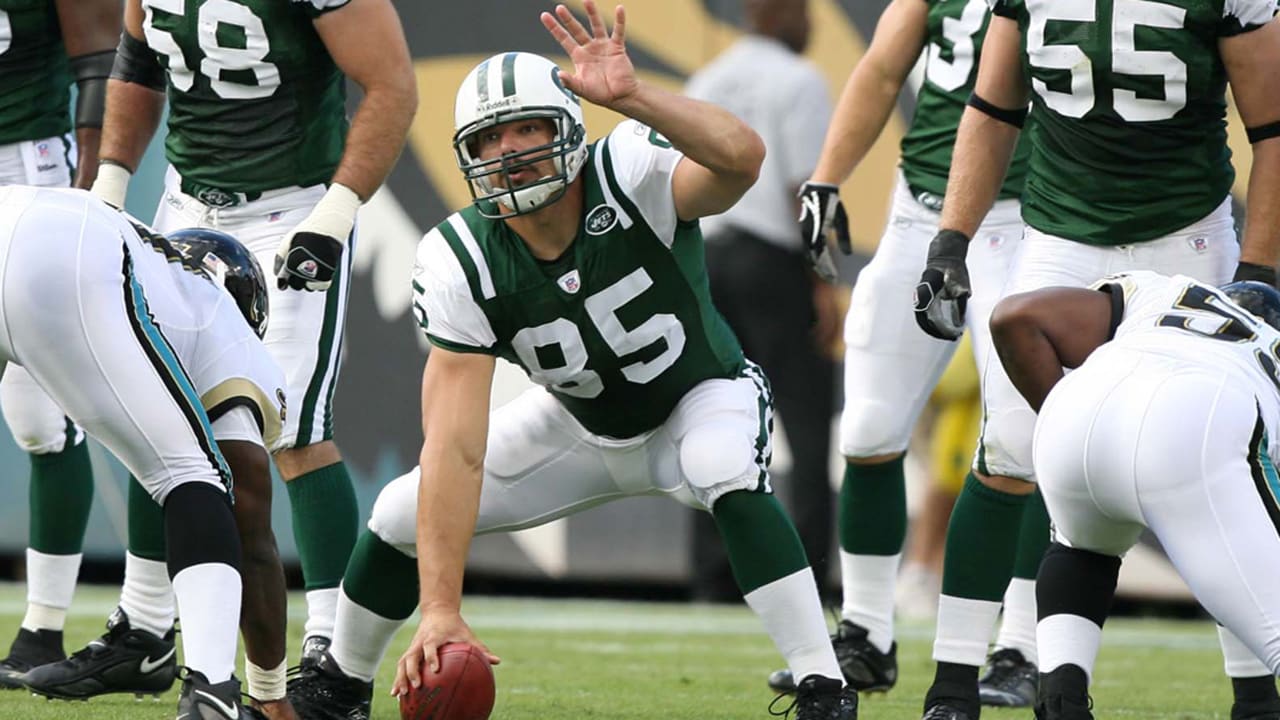
Dearth moved his wife, daughter and son up to New York in 2001 and rented a home. He still had to compete for the long-snapping job and worked his tail off under famed special teams coach Mike Westhoff. He won the job.
For the first time in his NFL career, Dearth was playing on opening day and had finally carved out a spot on a team. But the following Tuesday, his career was halted again—for a much different reason.
Dearth had thought about visiting the World Trade Center for a while now. As he drove back from the Jets’ home opener on Sept. 9 with his wife and two kids, they passed by the towers.
He told his wife, “That’d be pretty cool to go on top of those things.”
They talked the rest of the way home about making plans to visit the Twin Towers on his day off that Tuesday. The next day, during a team meeting, Dearth felt a really bad pain in his elbow. Another injury. He had to go in on Tuesday for treatment. The plans were off.
Dearth came into the Jets’ facilities Tuesday morning on Sept. 11. The North Tower had already been struck. There was a TV in the trainers room showing the news coverage. That’s where Dearth saw the second plane hit the South Tower.
“We had some guys who had family members that were killed in those towers, so they were trying to mourn, and the NFL was trying to play a game,” Dearth said, recalling the events.
“I remember that a couple of the guys on the team said, ‘We're not gonna play this week,’ and then the New York Jets as a team decided none of us are gonna play. ‘Even if they don't pay us, we don't care. We're not going to play. We're going to stand behind you, and we're gonna be with you guys.’”
The New York Giants swiftly followed suit and urged the NFL to cancel the weekend’s games. The league answered the call and rescheduled the games for the final week of the regular season, led by the Jets and Giants coalition.
“It still almost seems like a dream to me, like a nightmare,” Dearth said.
Dearth and his teammates spent the following days at Ground Zero assisting first responders and raising morale in the community.
“We brought them water, snacks, things like that. And then, as a team, we went to all the fire departments that had firemen lost in the tragedy,” Dearth said. “We were just there to hopefully pick their spirits up.
“It's tough because they lost a lot of people, but we were able to go there and see some kids smile. It really felt good to be able to give back and to help people when they're really struggling.”
He never could have imagined it would unfold this way, but Dearth had found a home in New York.
Later that season, he scored his first touchdown. The following offseason, he signed one of the longest contract extensions in NFL history—eight years—to lock up his future with the Jets.
“I mean, man, that was amazing. I was proud and thankful to the Lord, first of all, but also so thankful that the Jets organization believed in me,” Dearth said.
“For me and my wife, having a little bit of security was huge for us, 'cause, you know, we didn't grow up with a whole bunch of money. So it was really nice to be able to have that, especially after struggling our first two years in the NFL where you don't know if the bills are gonna get paid or not.”
The ideas of faith and gratitude had grown on Dearth over time. It started when he was in high school.
Dearth didn’t grow up a Christian. If someone had said ‘Jesus’ to him, he wouldn’t have known what you were talking about.
Dearth grew up in a tight-knit family of seven in small rural Texas. His mom was never religious, but she had a giving spirit.
Dearth said that sometimes there would be 17 people living in their house from everyone she was taking in to help, even if she didn’t have to, which was most of the time.
In high school, Dearth met someone who changed his life. His name was Scott Emorang.
Emorang knew that Dearth and his family didn’t have a whole lot of money, so he started giving him rides to school. When Dearth got in the car, he started telling him about this guy named Jesus.
“He never missed an opportunity. I think every day I ever talked to him, he shared the Gospel message with me,” Dearth said. “I didn't really understand what he was talking about. I said, ‘Well, this Jesus sounds like a pretty good guy.’”
One day, Emorang invited Dearth to church. He was hesitant at first. Then Emorang told him that there would be pizza. There were times when Dearth and his family didn't have much to eat at home, so being able to eat pizza was a big deal. He accepted the invite.
“I went, and I knew that there was something missing when I went to that church service,” Dearth said. “I knew something in my life was missing.”
Before long, Dearth officially converted to Christianity.
“It was really tough for me because I didn't like being in front of a whole lot of people without a helmet on,” Dearth chuckled. “When I walked down the church aisles, I told the pastor, ‘I need Jesus,’ and I gave my heart and life to Jesus and haven’t been the same since.”
Emorang and Dearth really had nothing in common, and they’re still close friends today. Dearth said Emorang just saw that he didn’t know Jesus and invested in him.
“He taught me how to write,” Dearth said, as he was more of a math guy growing up. “It was crazy. This guy taught me so much stuff. He went way out of his way for me and really showed me what a true friend is.”
Dearth’s priorities in life were changing. Football was his God, his everything, his moral fixation—and it was taking over his life like a spiraling obsession. It needed to be balanced before he burned himself out.
He finally knew what to do. From then on, Dearth wasn’t playing so hard to win, necessarily, or to vindicate himself. He was playing to glorify God.
“James had such a great attitude and was such a team person,” Whitten said, as Dearth’s growth was on full display come college. “He was a young man of faith, very strong faith. He just wanted to help the team and to do well.”
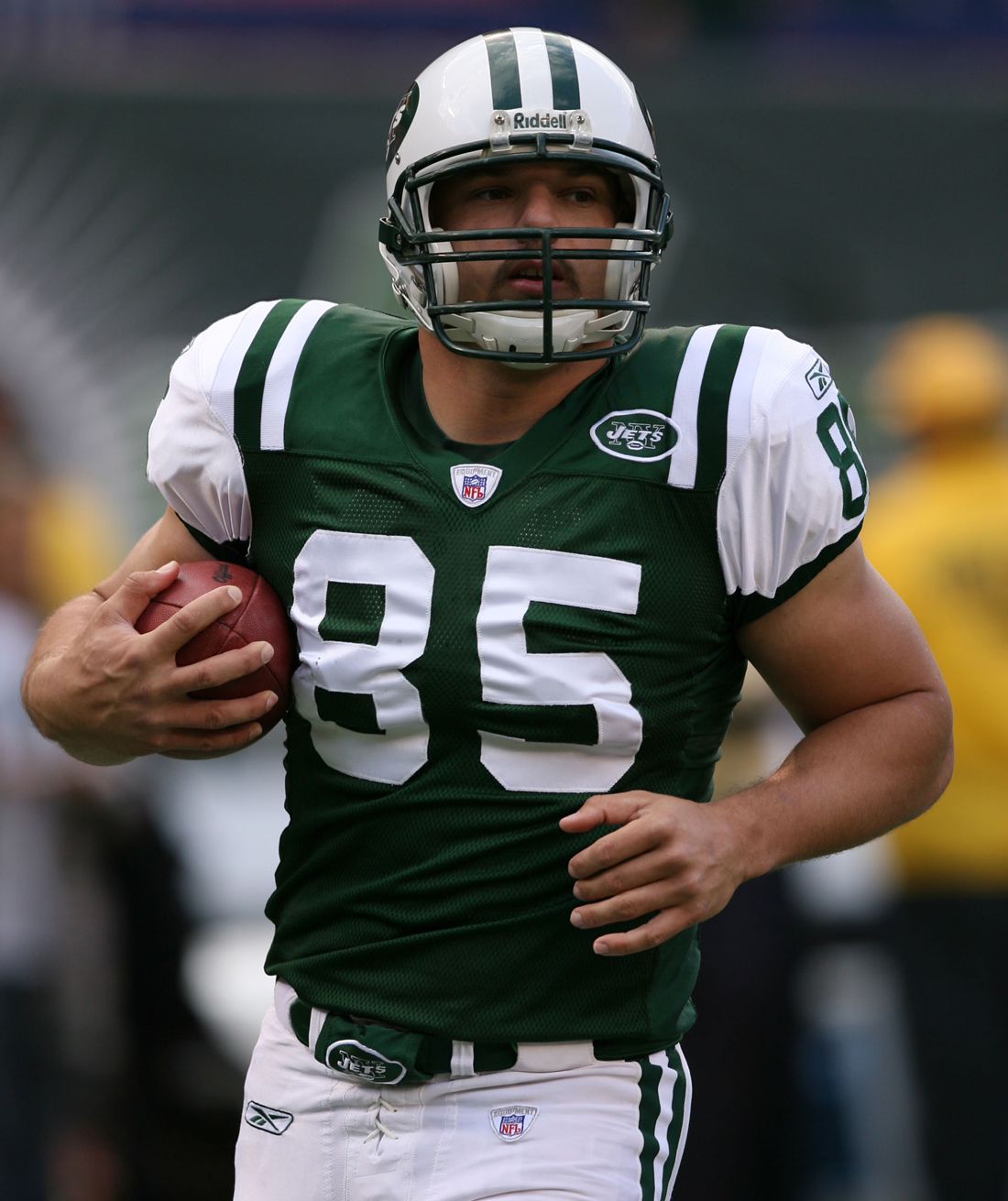
After Dearth bid farewell to his NFL career in 2011, having spent more time in the league than any Tarleton State Texan in history, his body was falling apart.
Injuries were an ongoing occurrence for Dearth, and they continued in his time on the Jets, even though he never missed a game in his nine seasons with New York. He gives much of the credit to the Jets training staff, led by John Mellody, “the greatest training staff in all of football,” in his mind, for always keeping his body ready to play.
“I probably spent more time rehabbing than I did anything else,” Dearth chuckled.
Every game he played through injury was like a tax to be paid later in life. Now that he’s been retired for over a decade, and his body’s a little less pliable, he feels it undoubtedly.
Dearth has had close to 15 surgeries since he’s been retired, including 10 spine surgeries. He played 10 years with a broken back. He didn’t know it was broken at the time, but when he retired, his doctor concluded that he couldn’t have sustained that injury even five years ago. It had to have been much longer because of how the bones had rubbed around his spine.
“I was always wondering why my legs would go numb when I'd be on the field,” Dearth said. “I would always have to do traction on my back to get my legs back under me. I’d do that in between snaps and stuff.”
As a long snapper, tight end and reserve blocker, Dearth also has a long history of concussions.
“When you're a field goal snapper, one of the things that these guys like to do is cross your body, and then as they're crossing, they’ll knee you in the head,” Dearth said. “It just knocks you out.”
He had to have neck fusion surgery in time from all of the head injuries he’d sustained. He also doesn’t have labrums in his shoulders. His doctor told him that he’s “a 100% candidate” for shoulder replacements in the future.
When the Jets played the Browns on Oct. 11, 2026, Dearth was invited back to East Rutherford for Legends Weekend. Before the game, he was lined up on the field with fellow Jets legends to be recognized, as they waited to welcome the current team once they ran out of the tunnel.
His right foot was hurting, so he subtly shifted his weight to the other foot and felt a pop.
“I looked at my buddy, Jonathan, I said, ‘I think I just broke my foot,’” Dearth said.
In hindsight, he thinks he already had a Jones fracture in that foot and that the pop was the tendon. Either way, it’s difficult for Dearth, 50, to move around nowadays.
As he made his way up the steps of the Tarleton football stadium for our interview, he gripped the railing on both sides as he gingerly pulled himself up, almost like a human stair glider. He had already mentioned the foot incident at the Jets game and how doctors want to fuse his left foot because it doesn’t have a peroneus longus tendon anymore.
Dearth doesn’t have much more to give physically, but he does have a lot to give, so he does it through his stewardship.
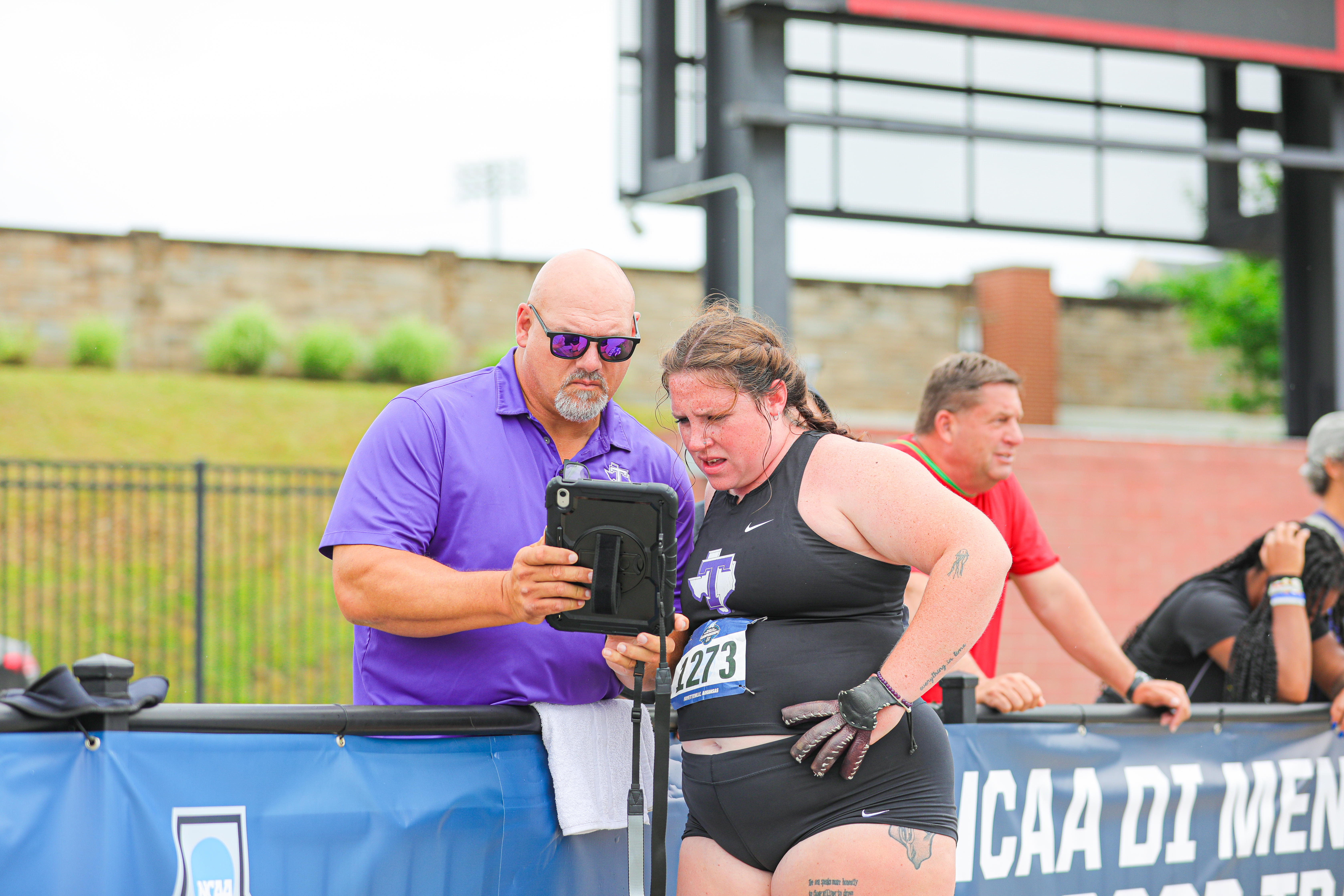
In 2020, Dearth returned to Stephenville to be an assistant track and field coach at Tarleton. Not just any kind of assistant coach, though. A volunteer assistant coach.
Dearth wanted a chance to coach his oldest son, Kendall, who was heading into his second year as a thrower at Tarleton. The program didn’t have a throwers’ coach, so in came Dearth.
“Man, Coach Dearth is... he’s the glue,” Tarleton’s head track and field coach, Bobby Carter, said. “He is the glue to what we have for our entire program, if I’m being honest. Man, our throwers wouldn’t be here (Carter laughed) if he wasn’t there.”
Carter arrived at Tarleton in 2024 and immediately felt the impact Dearth had on the program.
“When I first got to Tarleton State University, first thing he said was, ‘How can I help?’” Carter said. “He gave me a lot of information on how things were in the past and how he would like to see things. He has always been great to be around and just a joyful person.”
Dearth fell in love with coaching the athletes, even after his son graduated. Now, he coaches his youngest son, Kolton, who also plays football, as did his brother—and just like their dad.
“He truly cares about these kids,” Laurie said. “We pray for them; he shares his faith. I think it's just his way of giving back.”
Dearth hasn’t been paid a dime in six years.
What started out as a way to spend time with his son evolved into a “ministry,” in Dearth’s words. He uses his coaching as a platform to invest in people—so that one day, they’ll want to invest in somebody else.
Almost like his Jesus friend did for him once upon a time.
“I always tease the athletes when they say, ‘Hey, coach, how you feeling?’” Dearth said. “I tell them, ‘I'm doing OK. I just got this and this and this, but at least I got that going for me.’”
Comment
Comments