.png)
 Andrew Utterback
BY ANDREW UTTERBACK
Podcast Producer
(Spoiler-free review)
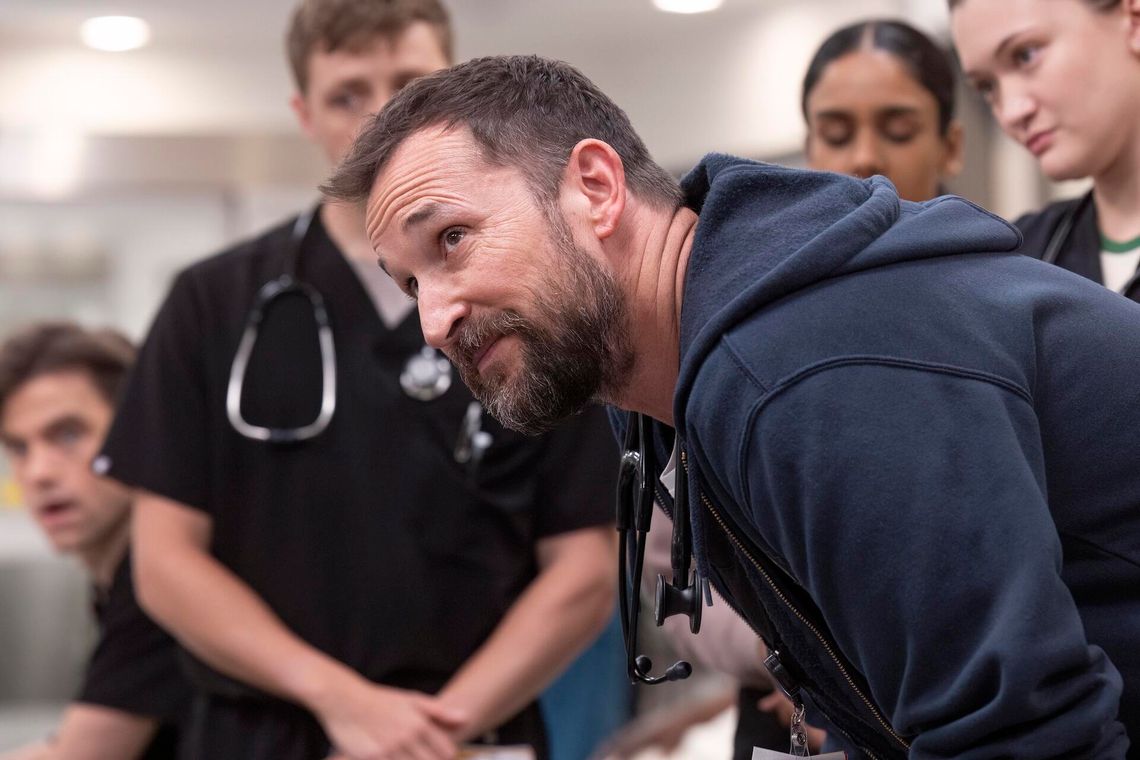
Max’s new hit medical drama, “The Pitt,” gives viewers an inside look at the procedures, emotions and chaos that ensues at a busy hospital’s trauma center.
A few months ago, I binged the whole season of Netflix’s “Emergency NYC.” I had tried to watch so many other medical shows before, and the overly dramatic scripts and medical inaccuracies (or at least what seem like quite obvious ones to a non-doctor like myself) just made them hard to watch episode after episode.
“Emergency NYC” was an authentic look inside a real ER: no corny scripts or bad actors, just real footage from actual and intense situations.
Just a week or so after I finished the last episode, I saw a lot of attention around a new Max original medical show, “The Pitt.”
I read it was yet another drama, rather than another documented look inside an ER, and my hopes plummeted a little. But after watching all 15 episodes now streaming on Max, it’s not only the best medical show I’ve seen but possibly one of the best TV shows, period.
The show stars Noah Wyle, who notably starred in NBC’s 15-season long TV show, “ER,” one of the most well-known medical shows of all time. Wyle plays Dr. Michael Robinavitch (Dr. Robby), who serves as the attending physician at the Pittsburgh Trauma Medical Hospital.
The 15-episode long show follows Dr. Robby and the rest of “The Pitt’s” staff for the entirety of a full 15-hour shift. Each episode is one hour long, and the episode titles are the shift’s timestamps: from “7:00 AM” (Episode 1) to “9:00 PM” (Episode 15).
This format makes the show much more engaging than a traditional drama, as you begin to really feel like you’re with the characters through their whole shift.
Residents will, for example, request that testing be done on a patient, and then halfway through the next episode (an hour or so later), the results will come back.
The “real” sense of time passing allows the show to spend more time on each patient and create storylines that can take multiple episodes to fully mature. It doesn't feel rushed.
Dr. Robby is greeted in the morning by four up-and-coming doctors who are working their first shift in “The Pitt.” Resident and intern, Dr. “Mel” King (Taylor Dearden) and Dr. Trinity Santos (Isa Briones), respectively, as well as med students Dennis Whitaker (Gerran Howell) and Victoria Javadi (Shabana Azeez).
The one-day format allows the viewer to watch as these four characters begin to learn the ropes of the ER, gain the respect of the hospital staff and even perform procedures on their own.
The characters are exceptionally well cast, and I think that despite the one-day format, you still see significant character development as the chaotic day progresses.
I said this would be a spoiler-free review, so I won’t get into specifics, but “The Pitt” is extremely entertaining to watch. It’s not overly dramatic where it feels unrealistic, but I think it captures what I assume to be a very real sense of the tense emotions that occur in both the ER staff and patients in such a high-traffic hospital.
I spoke to a surgeon's assistant about the show, who said it was the best TV drama they had ever watched, noting that the dialogue, intensity of its delivery and the overall diagnoses of the cases are all spot on.
Part of how “The Pitt” is captivating viewers (over 10 per episode) is the emotional aspect of the show, which is once again aided by the 15-hour format.
Viewers watch as the residents, nurses and students get hungry, tired, annoyed, stressed, etc. There are few times in the show where we see the hospital’s staff not on their feet scrambling to help the next patient. The show places a large emphasis on the mental health of doctors in this kind of environment and the importance of the staff supporting one another.
The surgeon’s assistant I spoke to echoed this, saying, “Every patient is somebody’s mother, sister, aunt, cousin, in-law, grandmother, etc. The stoic nature surgeons “put on” can take its toll on the emotional psyche of the caregiver during the decompression time after the initial trauma. It is real, but is carefully and skillfully kept in check until those decompression times hit. Anything under enough pressure will ‘explode.’”
In his appearance on “The Late Show with Stephen Colbert” Wyle said that this was an important message that the team behind “The Pitt” wanted to share.
“We believe firmly that the strength of our healthcare system is proportional to the mental health of our practitioners and the degree to which we support them,” Wyle said on air.
“The Pitt” highlights the lasting effects that the COVID-19 pandemic had on healthcare workers, as well as several other pressing issues that healthcare workers are faced with. It does an excellent job of reminding the viewer that the doctors and nurses saving lives have their own struggles going on, most of which they have to suppress in order to carefully treat one patient and then move right on to the next without skipping a beat.
The intensity of the show’s environment is tastefully balanced with sweeter moments of heartfelt patient interactions or playful banter between staff members.
The shows creator, R. Scott Gemmill, has already announced that Season 2 of the show is coming soon, with the same hour-by-hour format, this time taking place over Fourth of July weekend, around 10 months after Season 1 ended.
I’m definitely looking forward to Season 2 and hoping that “The Pitt” can run close to “ER”’s 15-year tenure, which seems possible after the rave reviews of the first season.
Seriously, it’s excellent.
Comment
Comments