.png)
 Hannah Brooks
BY HANNAH BROOKS
Multimedia Journalist
When students returned from winter break this January, Tarleton’s Recreation Center was noticeably different.
Since the start of 2026, Tarleton’s Recreation Center has seen substantial changes to its facility and programs, including new equipment, restructured workout spaces, pickleball courts and an expanded range of fitness classes offered at more times.
In the past two years especially, there’s been a lot of talk and concern about how overcrowded the Rec was becoming and what could be done to alleviate that pressure as the student body continues to grow.
Director of Campus Recreation Mario Rios said that growth is exactly what is driving these changes.
“Campus recreation must grow with the university,” Rios said. “As more students come, we must adapt to meet their wellness needs.”
Associate Director of Fitness and Wellness Sara Segoviano has been working behind the scenes to address the equipment quality, quantity and layout since arriving in May 2024, and her plan has finally come to fruition.
At first glance, the changes seem to be for aesthetics, but Segoviano says she put a lot intentionally and thought into it.
“My main objective was to get new equipment and make sure the layout is friendly for everybody, not just one type of body,” Segoviano said.
Before the redesign, the space was cramped and outdated. Equipment placement did not always account for accessibility or comfort, particularly for female students. Segoviano said many machines were positioned without considering how exposed or uncomfortable certain movements could feel.
“You don’t want to be showing your bits and pieces to everybody, you want to be comfortable during your workout,” Segoviano said.
To address this, equipment such as hip thrust, back extension and abductor machines were strategically relocated to more private areas facing walls or windows, allowing students to focus on their workouts without feeling watched. Additional upgrades included increasing the number of Smith machines from one to three, adding four new two-sided lifting platforms and expanding rack space for strength training.
The redesign also improved accessibility.
“The old layout wasn’t up to ADA standards. I made it very accessible, and now everybody’s included,” Segoviano said.
Walkways were widened to meet ADA standards of at least 32 inches of space, creating enough room for people using walkers or mobility aids. This makes it easier for all students, including those using mobility aids, to navigate the space.
“I train someone twice a week who uses a walker, and now they can move in and out without any problem,” Segoviano said.
Beyond physical changes, the Rec has also seen rapid growth in its group fitness programming. When Segoviano arrived in 2024, only about seven classes were offered. That number has since grown to more than 70 per week.
“We’re offering gold standard group fitness instruction that’s free to students. You’d normally pay $25–$35 per session at a studio,” Segoviano said.
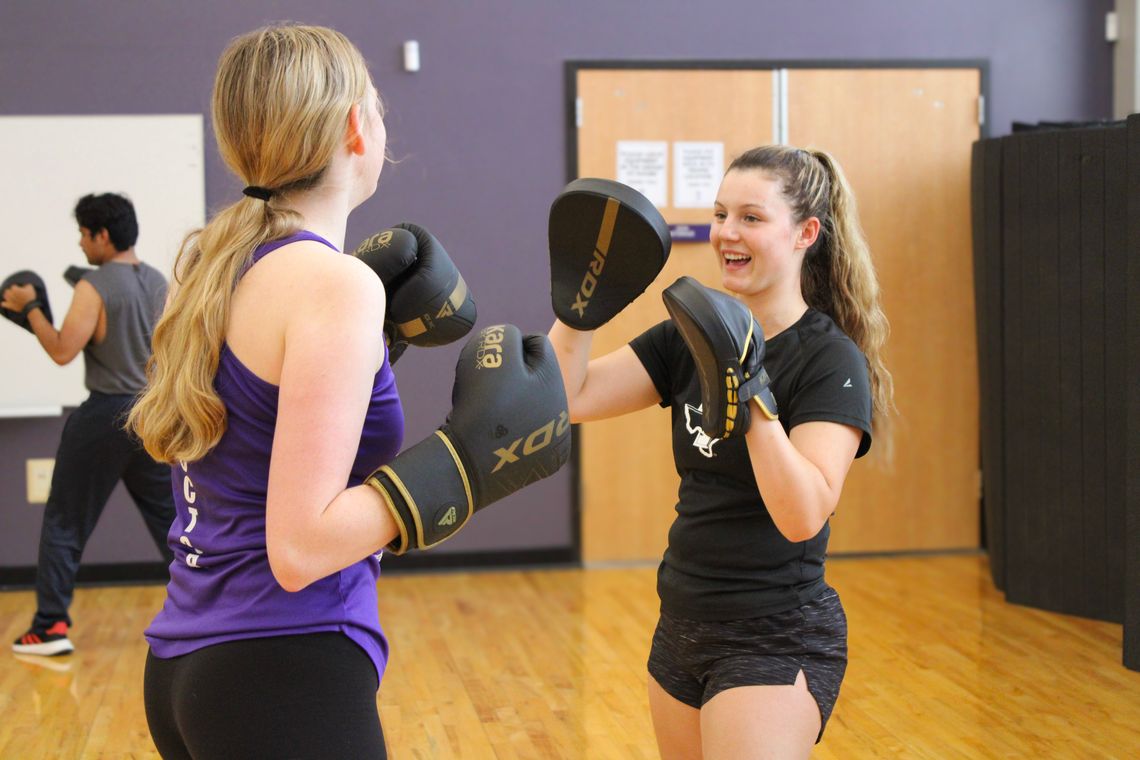
Popular classes include Pilates, yoga, cardio dance and kickboxing. Participation has risen sharply, with Pilates seeing a 100% increase, cardio dance up 40% and rehabilitative classes, such as foam rolling and glute/ab workouts, growing by roughly 60%.
The overall expansion has also shifted student engagement patterns. Segoviano noted an increase in male participation in fitness classes, while more female students are utilizing the weight room.
“We’re starting to normalize male instructors and in turn getting more male participants,” Segoviano said. “We’re normalizing that everybody can use every space.”
For many, the weight floor can feel overwhelming, especially for those new to college or coming from structured athletic backgrounds. Group fitness classes have helped bridge that gap by offering guidance, routine and a sense of community. Segoviano emphasized that need, saying, “A lot of kids here need to feel supported, they haven’t had consistency.”
This support can make all the difference. During my own difficult first year, fitness classes were a reliable outlet that provided me with a safe and structured environment that felt far more approachable than the weight room.
That sense of support is a key component in how campus recreation is viewed. Rios emphasized that the new goal is no longer just physical activity, but overall wellness.
“Recreation isn’t just about intramurals or working out anymore, it’s about holistic wellness, offering spaces to relax, practice or participate in organized activities,” he said.
“We want to create a space where students can relax, recharge and then go back to their academic pursuits.”
Looking ahead, the Rec center plans to continue expanding its offerings. Potential additions include strength and conditioning-style classes modeled after athletic training programs, increased yoga availability taught by Les Mills certified instructors and new wellness initiatives such as aromatherapy and recovery-focused experiences.
The push for more recovery and strength-based programming is a direct response to trends seen on campus.
“The wellness center has been seeing a lot of students coming in with back and leg injuries lately, so we want to be more proactive,” Segoviano said. “That’s part of why we’ve expanded recovery fitness programs and plan to bring in strength training classes to help prevent injuries instead of just treating them after they happen."
Future plans also include upgrading the second-floor cardio area by replacing underused equipment with more dynamic options like ski ergs, battle rope stations and upper-body based cardio machines.
“I want to give students options,” Segoviano said.
Comment
Comments