.png)
 Brooklyn McKinney
BY BROOKLYN MCKINNEY
Feature Editor
Cade Mathis is currently managing 200 beehives across Texas, balancing his growing honey company and still leaving enough time to serve his community as a full-time animal science student at Tarleton State University.
To many, that much responsibility might seem overwhelming, but to Mathis, it’s just a byproduct of having the patience and discipline to slowly add to a system that sticks.
What would eventually become a widespread honey company earning more than six figures began 10 years ago, when Mathis’ dad bought two beehives to sit in a secluded corner of Cross Timbers Ranch.
Before he knew it, Mathis was not only looking after the bees like they were his own, but he began gifting and eventually selling the honey they produced to teachers and classmates at just 12 years old.
What Mathis would come to learn is that beekeeping has to be about the bees, not how he could use them. In fact, a lot of what he contributes to his success is leaving enough honey behind for the hives to sustain themselves with as little outside interference as possible.
“If you compare us to a lot of the commercial bee companies and honey production companies, a lot of them treat chemically,” Mathis said. “I don’t do that. I feel very strongly against it. I’m very holistic and natural-based when it comes to beekeeping because they were around long before us.”
Mathis drives pests and parasites out of his hives with techniques like placing peppermint candies in the corners and dryer sheets over the top as a trap.
The secret to his success seems to be leaving enough time to learn what works with his bees and what doesn't, revealing these simple solutions.
“I think he sets a great example of finding that balance of still doing really well in school, but doing really well outside of school as well,” Dr. Eileen Faulkenberry, dean of Tarleton Honors College, said.
Mathis initially had a bee allergy before being stung enough to develop immunity. The stakes always felt high, but his resilience ran deeper.
“I didn’t really have any guidance. I went to Tractor Supply, and I think they had a beekeeping book for probably like $10. I watched a lot of YouTube, so I was self-taught,” Mathis said. “Some of those hives were mean, and they just swarm, so it took a lot to overcome that.”
In fact, he began to see these more aggressive swarms as an opportunity. According to Mathis, the bees with Africanized genes, better known as “killer bees,” that he keeps at Cross Timbers Ranch are often identified by this behavior.
“I check them twice a year, but they produce a lot more honey, like two or three times more than a regular beehive would,” Mathis said.
Mathis came to Tarleton because he didn’t just want the opportunity to sell honey; he wanted to learn more about the bees he was responsible for and open opportunities to make an impact by educating communities.
As a student in the Honors program with a passion for animal science, he published his book “Learning to Leave Enough” last month. “Learning to Leave Enough” not only serves as a beginner’s guide to fellow beekeepers, but also details Mathis’ experiences in the honey business in hopes that it helps people learn about the values of good stewardship.
Faulkenberry knew he was special as soon as he invited a group of students he had just met to grill steaks with him for his birthday, which also happened to be move-in day.
“His smile and sweet spirit struck me that very first day, and I thought, ‘This is an awesome kid. I am so glad he’s in the Honors College,’” Faulkenberry said. “He invites people into the community with him anytime that I see him on campus. He’s just that sort of positive personality that makes everything brighter around him.”
Faulkenberry said she admires not only his generosity but also his passion for beekeeping and producing honey. She specifically remembers the detail that went into the packaging of a Mardi Gras honey blend sample he gave to the Honors College administrative assistant.
“The number of hives that he has, the different flavors of honey, the honey sticks, his business, is way bigger than he lets on,” Faulkenberry said. “He doesn’t brag about all of this other kind of stuff that he’s doing.”
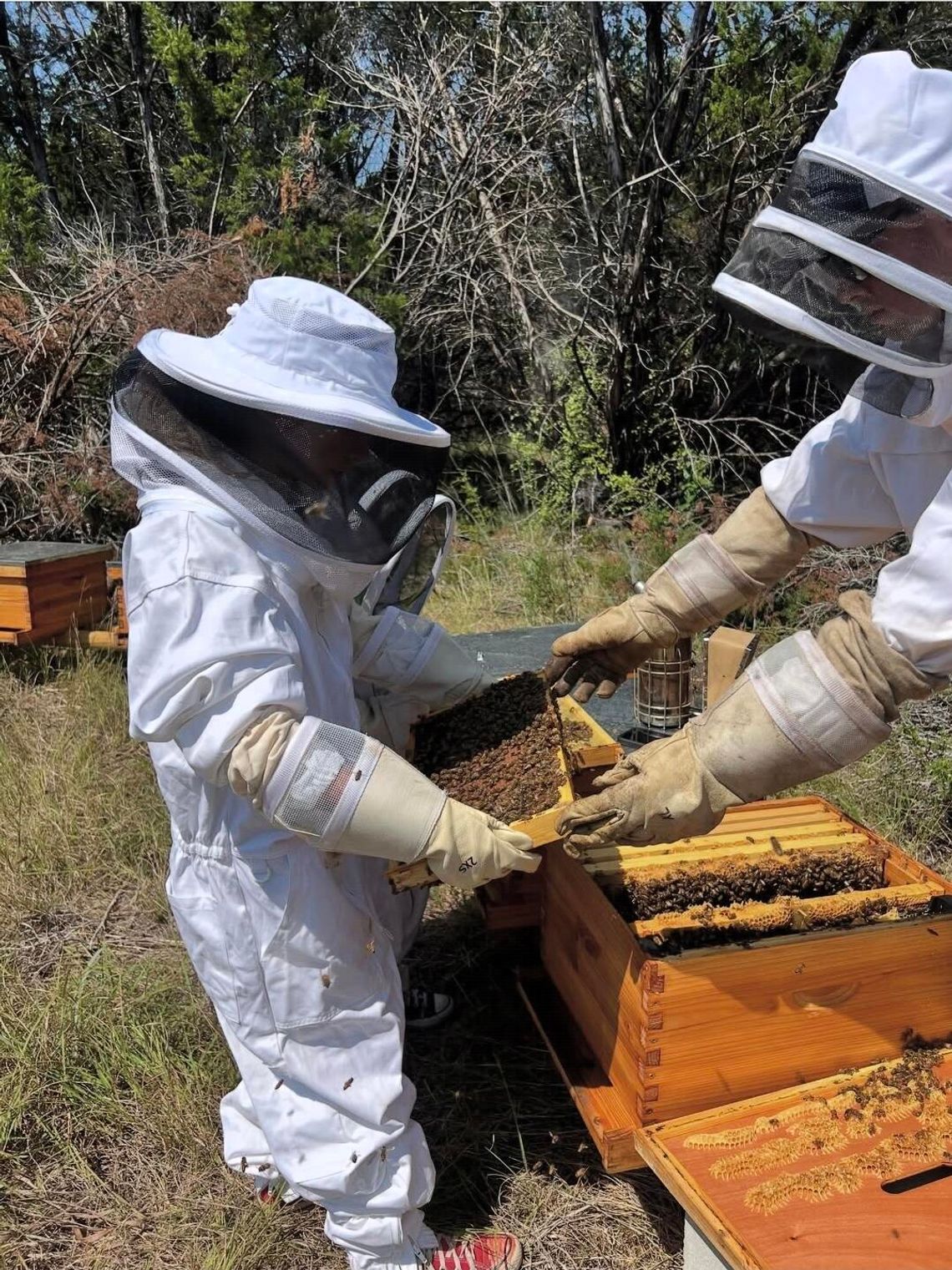
Mathis approached Dr. Faulkenberry with the idea of keeping beehives at Tarleton’s Agricultural Center in 2024.
“I was like, ‘Yeah, that’s a great idea. I think that could be a nice symbiotic relationship out there,’” Faulkenberry said. “All I did was point him towards a certain direction and say, ‘Go talk to either this person or this person.’”
In August 2025, Mathis’ dream of creating a “living classroom” of opportunities for his peers became a reality.
“My goal with that is to eventually create a four-credit class to teach future generations about the importance of pollinators, the honeybees themselves and how they can affect Tarleton agriculture, or our community’s agriculture and agriculture as a whole,” Mathis said. “Because without honeybees, you won’t have life, pretty much.”
While these classes aren’t in session at Tarleton just yet, those who are interested in learning the ins and outs of beekeeping can book two-hour beginner’s lessons at millheimhoneycompany.com for $200.
Millheim Honey Company also offers services for beehive removal and management for those who can’t or don’t wish to look after the bees themselves.
“Rather than killing the beehive, like a lot of exterminators would do, we’ll take it and relocate it to start a new hive,” Mathis said.
Mathis has just as big a heart for Texans as he does for honeybees.
In fact, from July 15–18 of 2025, 100% of Millheim Honey’s profits went directly to supporting relief efforts after severe flooding in Kerrville, affecting Camp Mystic and surrounding communities.
Despite seeing big success, Mathis has stayed as sweet as his honey.
“He sees what he does as a service for others, not something that’s going to inflate him, but it’s going to inflate others and support them and build them up,” Falkenberry said.
Comment
Comments