.png)
 Bethany Kilpatrick
BY BETHANY KILPATRICK
Editor-in-Chief
The cycle. Every American college student knows it. Wake up, go to class, study, go to work, go to bed and repeat. Flipping the switch to survival mode and never flipping it off is something learned from a young age.
“The American Dream” is sought after desperately to the point that emotions become minimized, health is pushed to the back burner and slowing down to enjoy life is simply discredited.
With the start of the fall semester, students are getting back into the grind mentality that seems as if it is the only option in order to lead a successful life.
While American productivity levels are high, so are depression and anxiety levels stemming from the hustle culture established long ago.
A [2026 article] from Lott Behavioral Health, “The Mental Health Impact of Hustle Culture: Why Rest Is the New Productivity Strategy,” discusses side effects of the “non-stop hustle,” including burnout, exhaustion, emotional collapse, anxiety, depression, psychological distress and more.
While hustle culture is by far the most prevalent in American society, Tarleton State University students and alumni have discovered that other countries seem to be living more presently and don’t seem to be carrying the same burdens that young adults in America do.
There were many lifestyle differences immediately noticed that were simply un-American.
Kellan Byars, a Tarleton Honors College student, traveled to Greece this past summer on a study abroad trip and noticed a cultural difference in how the Greeks simply start their day.
“The Greeks don’t get up and do anything until about 9 a.m.,” Byars said. “Jobs are later, and they end earlier.”
Not only do the Greeks not start their day by jumping up to an alarm like a trained zoo animal, but they also treat meals and dining differently.
“People typically go to cafes because there is no fast food like there is in America,” Byars said. “Instead of running by Starbucks and grabbing their coffee and their croissant and going to work, people in Greece go to a cafe and order some sort of baked good and have coffee, but coffee doesn’t go in to-go cups a lot. People sit on the sidewalks and enjoy their coffee with their friends.”
Tarleton alumna, Amiah Rodriguez, traveled to many parts of Europe this summer and noticed the same thing as Byars. She mentioned her family being excited to sightsee and quickly leave restaurants, but noticing they were the only ones in a rush.
“We would finish our meal, and we would be sitting there for a while,” Rodriguez said. “Most of the time we would have to flag someone down to get our ticket, because there were still things that we wanted to do. The meals are really where we saw the biggest difference.”
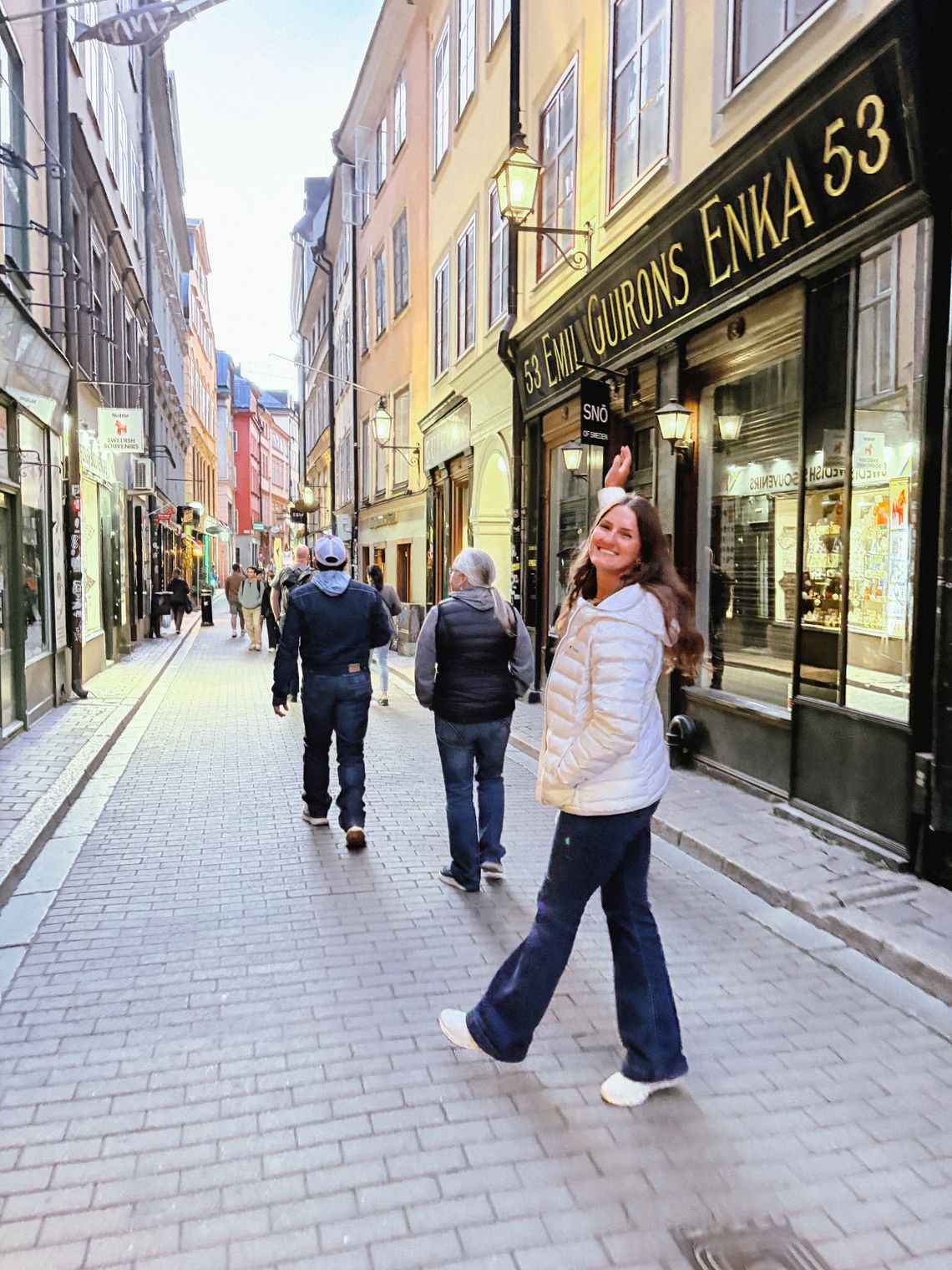
Tarleton student Laci Heiner traveled to Sweden this summer to teach a horsemanship clinic alongside two of Tarleton’s Stockhorse Team members.
Heiner noticed during her time away that the Swedes also don’t partake in the “rise and grind” lifestyle that so many Americans do.
“You always saw people walking everywhere or riding bikes,” Heiner said. “During the nice, warmer days there were people out on their boats out in the water, in the parks hanging and lying out, just enjoying life and keeping life at a much slower pace compared to here in America, where we just go, go, go and there are never any breaks.”
Byars realized while in Greece that college students treat education and work with an entirely different mentality than Americans do.
“A lot of college students get caught up in, ‘I have to study, and I have to study every single day to succeed,’ and that is something that the Greeks don’t do,” Byars said. “They take care of themselves. They sit all of their work down, and they go down to the beach for a day. They are happier, and they feel a lot better because they aren’t constantly having their noses in books.”
Byars suggests that students at Tarleton should implement times of stepping away from the Canvas notifications and simply living, like the Greeks.
Rodriguez's lesson she took away from her time in Europe favors the mentality that Byars
encourages.
“The biggest tool to implement that kind of lifestyle would be having an idea for what you need to get done, but not allowing it to be so overwhelming and stressful that you aren’t even paying attention to the people or the things around you,” Rodriguez said. “Give yourself breaks where you can just breathe.”
As students prepare to dive into another busy semester with all the stressors that it might bring, Byars encourages students to not let the cycle steal the joys life has to offer.
“We [Americans] have so many incredible discoveries and achievements,” Byars said. “But I think that achievements are not worth it if we aren’t happy and enjoying our lives. If you are stuck in the cycle of work, work, work until you die, you are not going to enjoy life.”
Comment
Comments