
 Brooklyn McKinney
BY BROOKLYN MCKINNEY
Feature Editor
A lot of us probably had a parent or grandparent who put on shows like “Dateline” from time to time or stayed glued to the screen when the news anchor talked about a robber on the loose in the neighborhood.
Some of us were also fascinated by these crimes. We wondered what would drive someone to take the human form of a monster in a slasher film.
Maybe we grew up watching podcasts or YouTube videos discussing their lives and how their actions had affected their victims.
Whatever our exposure to crime media has been, I think some of us can agree that we have felt a certain level of outrage that these atrocities were committed in the first place.
But are we any better than these predators if we consume the most intimate details of the victims’ lives like we’re gossiping with a friend over coffee?
Don’t get me wrong, I have consumed much of this content myself and find it very educational. Someone needs to be curious about these darker topics, especially because society needs forensic scientists, detectives and police officers.
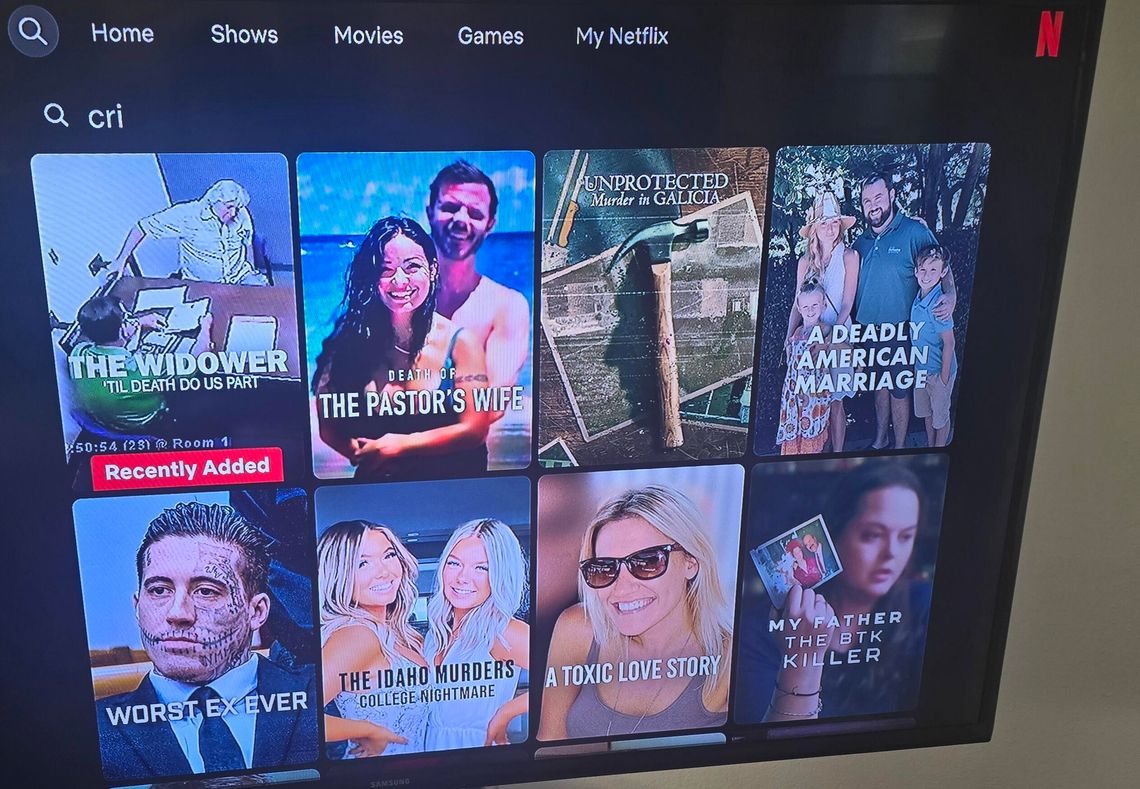
But between YouTube creators like Bailey Sarian being bashed online for laughing and doing their makeup while discussing the worst moment of victims’ lives and podcasts with names like “My favorite murder” popping up on Netflix recommendations, I think we have a lot of reflection to do regarding what we’ve been using for entertainment: the stories of real people and victims.
For example, one of the most popular documentaries in 2026 has been “Death of the Pastor’s Wife.” The show was about a woman named Mica Miller who was seemingly driven to suicide by her older pastor husband, who groomed her when she started attending his church at just 15 years old.
This docuseries presented evidence of the extensive mental and sexual abuse that occurred throughout Miller’s marriage and has since sparked conversations about the importance of holding church leaders accountable.
However, the show also chose to display several nude photos of Miller that many would regard as distasteful to be leaked, much less on one of the world’s most popular streaming services. Just because Miller is dead, is her legacy not deserving of protection?
How would you feel if you lost a mother or sister and her photos were broadcast to millions of strangers who never knew her in the flesh?
In 2025, everyone and their mother seemed to be watching the show “DAHMER – Monster: The Jeffrey Dahmer Story,” which was a retelling loosely based on the life of Jeffrey Dahmer, a serial killer notorious for eating his victims.
The show sparked conversations about crimes committed against minorities, such as sex workers, people of color and the LGBTQ community, being less frequently investigated than disappearances of higher-status or higher-income individuals.
However, even as someone who scoured Google for hours to find the exact psychological explanation for Dahmer’s sexual attraction towards corpses, I still found the on-screen depictions of this phenomenon, like the close-ups on the shining scales of dead fish and roadkill, quite sickening.
Furthermore, there were many creative liberties taken by screenwriters that strayed away from the original source material—court cases and interviews—to captivate audiences.
For example, neighbors frequently complain of the strong odor of rotting corpses in the series, although the smell from Dahmer’s real apartment came from chemicals he used to dissolve the bodies rather than the bodies themselves.
Many of the victims’ family members have also spoken out publicly on major news platforms about how the sensationalism of these crimes personally outraged them.
This was a repeated offense in “Monster,” another Netflix miniseries loosely based on the life of serial killer Ed Gein.
Although many horror movies such as “The Texas Chain Saw Massacre” also took inspiration from his notorious killings and grave robberies, these were presented as entirely fictional.
What seems ironic to me is that the theme of distorting fiction from reality in both Hollywood horror and news coverage showed up many times in “Monster,” yet producers do the same thing portraying Adeline Watkins in the series.
Watkins was a real person who rescinded her statement about dating Gein romantically upon further questioning by media outlets, seemingly embarrassed about the little involvement she may have had in his life.
Not only does the series portray her as a girlfriend, which was the only alleged statement made during the real-life investigation, but Watkins was also portrayed in the series as a long-term partner in direct support of the crimes.
We have to ask ourselves not only if the “true crime” stories we’re watching are driving a narrative that is true or not. We also have to ask if, by religiously consuming this content and giving it our stamp of approval, we could be contributing to something that outs the victim and plays to those whose speculations are completely detached from the repercussions of a criminal’s actions.
People can joke all they want and claim that it’s because they have dark humor and would even laugh at their own misfortune, but the truth is there would be no punchline unless everyone found the situation to be completely ridiculous.
Society has conditioned us to think these occurrences are rare or would never happen to us. We even blame these people for being in the wrong place at the wrong time.
How many people have told vulnerable populations, like women, that they should never drink or go to bars or clubs or frat parties because it’s too “risky” when, actually, it’s a pastime most people have participated in at some point in their lives?
Even if you do truly believe these actions are wrong, do people really deserve to be assaulted for making one mistake?
But some of us do think this way merely because it’s easier to dismiss these tragedies for what they really are.
For example, it is very common for women, and even men, experiencing abuse not to understand when a partner is displaying red flags or exploiting them.
It can be easy for abusers to plant thoughts into their victim’s heads to drown out any surrounding criticism, such as: “They’re just trying to sabotage you/us because they’re jealous.”
While this may sound ridiculous to someone who has never experienced this level of manipulation, messages like these are what have separated victims of long-term abuse from their support systems and into the hands of dangerous people.
Alas, many on the outside just don’t understand and make harmful statements about the victim, like, “I would never let someone treat me like that,” or “Why didn’t they just leave?”
But if you’re honest with yourself, most of us are wired to evaluate threats in our lives. Like, what if the abuser or killer deflects that threat onto the very people trying to keep them safe?
There is no doubt that abusers and killers are the true monsters, but do we become pawns in their game by paying them to tell us how they committed their crimes while overlooking the reality of those they affected?
Is the predator really that much more intelligent or intriguing than their former prey, or are they just more sick in the head?
The world would become a much better place if people’s main takeaway from true crime stories was how incredible the victims are for surviving the odds or how devastating their deaths really were, rather than simply exploring the distinctions between the killer’s life and ours.
In fact, this mentality can often blur the line between a perpetrator and their victim.
A great example of just how negatively this approach has impacted our society was in the recent discourse online about the court case of Lindsay Clancy, a mother who murdered her three young children in 2023.
People were very quick to empathize with Clancy, even citing postpartum psychosis brought on by neglect and alleged abuse from her husband as a possible explanation. Despite all of the misinformation going around online, postpartum psychosis is, in fact, experienced postpartum, just days or weeks after the baby is born.
The only hallucination she had personally claimed to experience would have been right before the killings that occurred months later.
This was a stark contrast to the discourse surrounding news coverage of the Andrea Yates case in the early 2000s, another woman who murdered her young children and faced a lot of backlash from the public for the cold-blooded nature of her crime.
I believe more people understood back then that everyone has the choice between being a human and a monster.
Comment
Comments