.png)
 Kellan Byars
BY KELLAN BYARS
Multimedia Journalist
Standing inside a meat packing plant for hours at a time may not sound appealing to most college students, but for members of the Tarleton State University Meat Judging Team, it is where competition, connection and career preparation come together.
“This is one of those things you don’t fully understand until you’re in it,” junior animal science major Reese Harpool said.
“You spend all day in the cooler, and then you walk back through the contest with your coach, not knowing how you did. That waiting is the hardest part.”
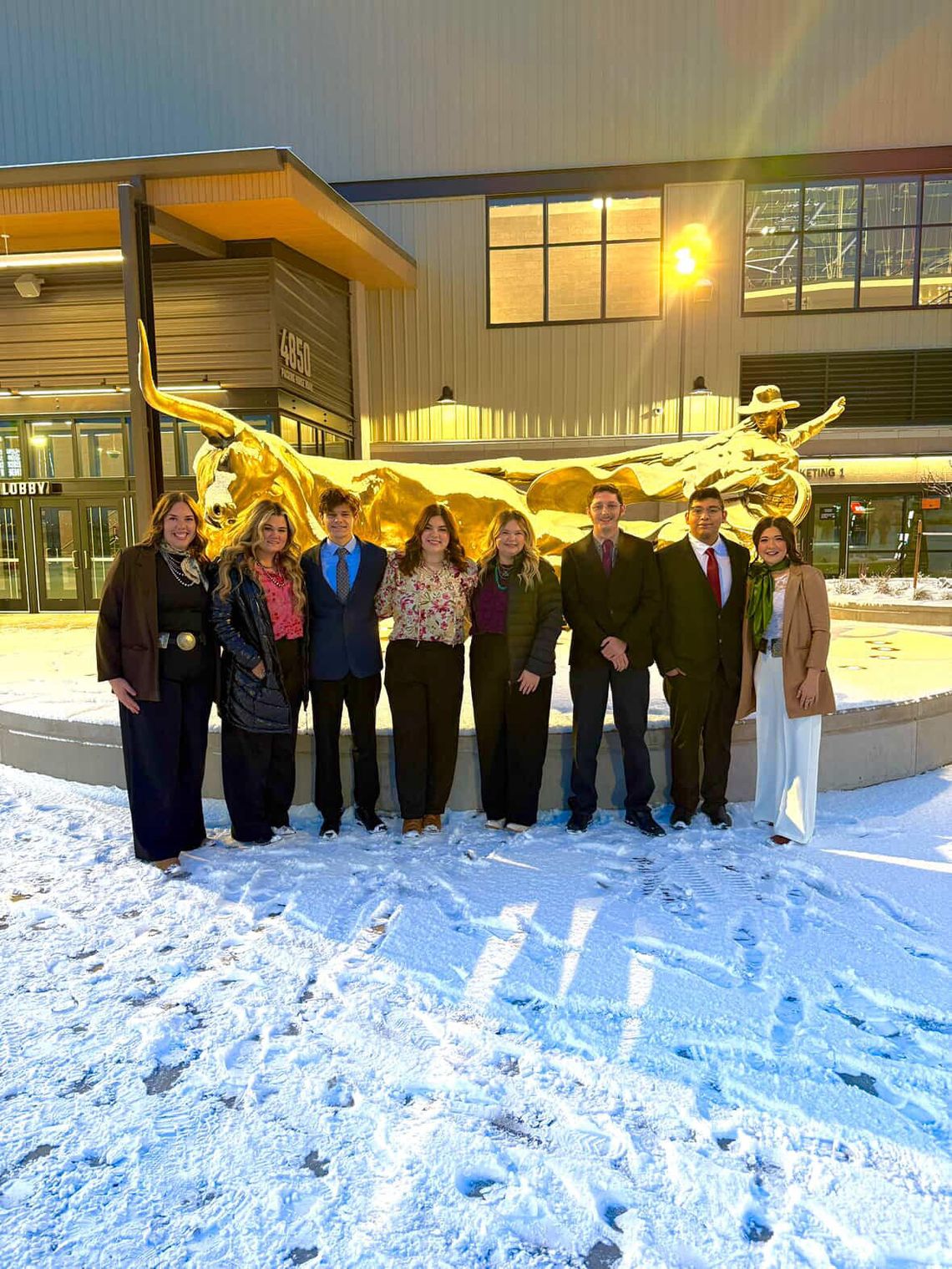
That pressure paid off recently when Tarleton placed fifth in lamb judging, sixth in reasons and seventh overall at the National Western Stock Show in Colorado. Grace Pfeifer took fifth place in lamb judging. Garrett Ballard also earned a 10th-place individual finish in reasons and ninth in pork. These results, team members say, reflects a program that is growing rapidly.
While it may seem like a relatively simple contest, preparation for collegiate meat judging begins long before a contest.
“We start preparing almost a year in advance,” Harpool said. “When you go to contests, you’re there a week early, practicing all day in the plant.”
Those long days quickly turn teammates into something closer to family.
That sense of belonging drew Sarah Achterberg, an agricultural education major who transferred to Tarleton, back into judging after high school.
“I judged all through high school and fell in love with the science behind it,” Achterberg said. “When I transferred here and got the opportunity to judge at the collegiate level, I jumped on it immediately.”
At its core, meat judging focuses on evaluating beef, pork and lamb the way industry professionals do long before products reach grocery store shelves.
“We evaluate quality and specifications,” Achterberg said. “Basically, what the consumer would want to buy and how it should look in the store.”
Lamb judging, where Tarleton stands out, presents a unique challenge.
“Lamb fat is really gamey,” Achterberg said. “You want minimal fat but still a lot of muscling, so you’re getting what you pay for.”
Beyond placing carcasses, students must also defend their decisions through reasons, a timed written explanation delivered under pressure.
“You only get a few minutes to write a four-paragraph set of reasons,” Achterberg said. “You have to explain your placement scientifically, and that’s a lot harder than people think.”
Ironically, the hardest part of competition often comes after the judging ends.
“You spend all day in the cooler, and then you just wait,” Harpool said. “You walk back through the contest with your coach, find out what you did right and wrong, and then you wait to see the results.”
Though smaller than some long-established programs, Tarleton’s meat judging team is growing quickly, fueled by faculty support and student commitment.
“Our program is still small, but we’re growing really fast,” Harpool said. “Our coach and assistant coaches have put so much into us and into this program.”
Achterberg emphasized that the support extends beyond the judging room.
“Everyone in the meat science program has a true passion for this,” Achterberg said. “They see how hard we’re working, and that makes a difference.”
For many students, meat judging shapes their future far beyond competition day.
“Meat judging gave me the opportunity to connect with industry professionals,” Harpool said. “I got an internship with Cargill in Nebraska, and that experience changed what I want to do with my career.”
Achterberg said the experience also changed her personally.
“I wasn’t very outgoing before this. Being on this team helped me come out of my shell,” Achterberg said. “I’m happier, more confident and surrounded by people who love the same thing I do.”
While trophies and rankings matter, students say the real reward is growth.
“It’s not just about winning,” Achterberg said. “It’s about how much we’ve grown as people and how confidently we can talk about our industry.”
For those curious about joining, both students had the same message.
“Just do it,” Achterberg said. “It’s intimidating at first, but once you’re in, you fall in love with it. It’s an experience unlike anything else.”
Comment
Comments